Species conservation is scaling up. Here’s where it’s happening.
Across regions and species, conservation efforts are accelerating. Recent global momentum, including at CMS COP15, is setting direction, while funding and partnerships are pushing action forward on the ground.
From safeguarding vital wildlife corridors to local restoration and rapid-response to biodiversity threats, here’s where progress is taking shape.
A broader shift in how species conservation is delivered
Across the conservation field, similar shifts are taking shape, pointing to a more coordinated and increasingly outcome-focused approach.
- Restoration is scaling globally. Countries are moving from pledges to delivery, with large-scale efforts underway to restore degraded forests, wetlands and coastal systems, often with clear targets for biodiversity and climate benefits.
- Finance is evolving. New mechanisms are gaining traction, including biodiversity credits, nature-positive investment frameworks and blended finance approaches designed to mobilise private capital alongside public funding. The emphasis is increasingly on measurable outcomes.
- Invasive species are rising on the agenda. Following the Intergovernmental Science-Policy Platform on Biodiversity and Ecosystem Services global assessment, there is growing recognition of the scale of the threat and the cost-effectiveness of acting early, before species become established.
- Connectivity is receiving increased attention. There is growing recognition that conservation extends beyond protected area systems, with increased focus on ecological corridors that support landscape connectivity to sustain species populations over time.
- Community-led approaches are becoming standard practice. Locally led conservation and Indigenous stewardship are increasingly recognised as essential to long-term outcomes, with stronger emphasis on governance, equity and sustained engagement.
Together, these trends point in the same direction: conservation is becoming more targeted, more connected and more focused on delivering measurable results on the ground.
As new initiatives roll out and existing programmes expand, the focus remains the same: delivering results where they matter most.
Connecting landscapes across borders
At the policy level, momentum is translating into clearer frameworks for action.
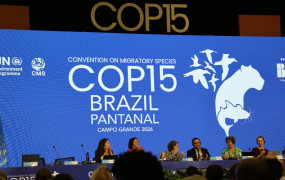
At CMS COP15, governments agreed on a roadmap to safeguard migratory species corridors, an important step for maintaining ecological connectivity across borders.
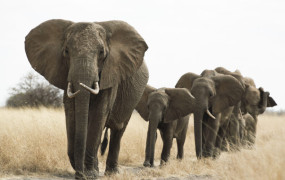
At the same time, attention is turning to implementation. Under the Joint CMS-CITES African Carnivores Initiative, efforts are focusing on how to operationalise commitments, with targeted support for some of Africa’s most threatened species.
Explore:
Delivering results across landscapes
On the ground, large-scale programmes are already showing what coordinated conservation can achieve.
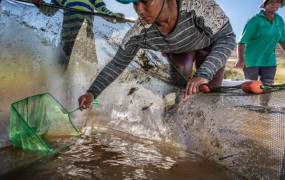
Across sub-Saharan Africa, action on invasive alien species as part of the African Wildlife Initiative is restoring ecosystems and reducing pressure on native biodiversity, through interventions such as clearing invasive plants and restoring wetlands.
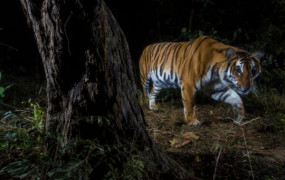
In Asia, the Integrated Tiger Habitat Conservation Programme (ITHCP) continues to support landscape-level conservation across multiple countries, linking habitat protection, conflict mitigation and livelihoods. Six projects supported under Phase IV of ITHCP are now working across priority habitats in Indonesia, Thailand, India, Nepal and Bangladesh.
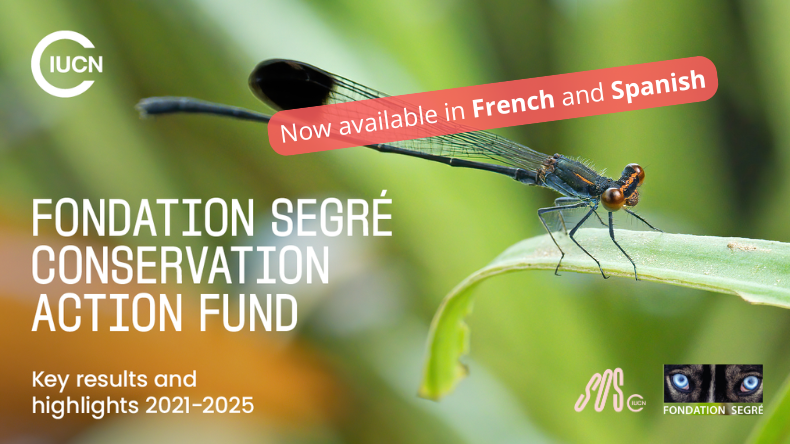
Alongside these landscape-level efforts, consolidated reporting is helping to capture and share results across portfolios. The Fondation Segré Conservation Action Fund impact report – Key results and highlights 2021–2025 is now available in French and Spanish, bringing together evidence from 84 projects across 41 countries and illustrating how targeted, locally led grants translate into measurable outcomes for threatened species and the communities who depend on them.
Explore:
- Turning the tide on invasive species across Africa
- Across Asia, six projects are reshaping the future of tiger landscapes
- Fondation Segré Conservation Action Fund impact report now available in French and Spanish
Targeted action where it matters most
Alongside landscape-scale efforts, more targeted funding is enabling rapid and locally led responses.
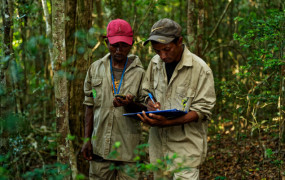
Under SOS Lemurs, 14 new medium grants are supporting projects across Madagascar, reinforcing conservation efforts on the ground. These new projects expand the programme’s reach to new beneficiaries, new sites, new species, and scale up efforts across a range of interventions, from restoring forests and reconnecting fragmented habitats to reducing hunting pressures and supporting communities through sustainable alternatives.
At the same time, the European Invasive Alien Species Rapid-Response Fund has launched its first cohort of supported projects, enabling early detection and rapid action before species become established and harder to control.
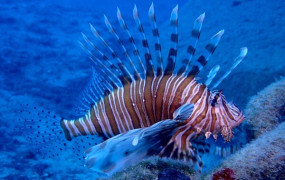
IUCN is calling for projects supporting targeted, time-bound interventions that can stop the spread of invasive alien species at an early stage, where action is most effective. The call for proposals is open until 10 February 2027, 14:00 (CEST) or until funding is fully allocated.
Explore:
- 14 new projects expand lemur conservation to new sites, species and communities across Madagascar
- First projects supported by the European Invasive Alien Species Rapid-Response Fund
- Apply for funding under the European Invasive Alien Species Rapid-Response Fund
Act early, act fast: funding rapid response to invasive alien species in Europe
To support this momentum, IUCN Save Our Species will host an upcoming webinar on 20 May exploring how rapid-response action can be implemented effectively in practice.
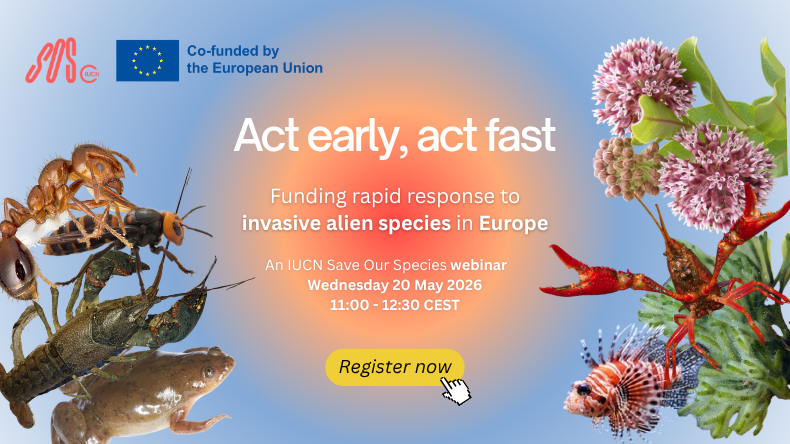
It will bring together leading experts and practitioners working on the frontlines of invasive alien species management to discuss what enables effective early detection and rapid intervention, from financing and decision-making to implementation on the ground. Through practical case studies and an interactive panel discussion, the session will examine how coordinated action can help prevent invasive species from becoming established and causing irreversible impacts on biodiversity and livelihoods across Europe.
What’s next: key moments to watch

New Red List updates and national assessments are expected to close critical knowledge gaps and directly inform conservation planning and funding priorities.
World Bee Day (20 May) – new data and campaigns expected as pollinator decline continues to accelerate, with >20% of assessed bee species threatened and further national Red List updates underway.

Global Big Cat Summit (New Delhi, India, 1-2 June) – India is set to host the first global summit dedicated to big cats under the International Big Cat Alliance (IBCA), where a Delhi Declaration on the Conservation of Big Cats is to be adopted.

CBD COP17(Yerevan, Armenia, 19-30 October) – governments will assess progress on implementing the Kunming–Montreal Global Biodiversity Framework, with increasing scrutiny on delivery, financing and national accountability.
UN Decade on Ecosystem Restoration – acceleration phase, countries are moving into large-scale implementation, with restoration commitments now covering over one billion hectares globally, alongside growing pressure to demonstrate measurable biodiversity and climate outcomes.
Nature finance scaling up – biodiversity credit pilots and blended finance mechanisms are expected to expand in 2026, building on TNFD frameworks and increasing investor engagement in nature-positive portfolios.

Tracking delivery of global biodiversity targets – new tools and implementation trackers are being rolled out, with a stronger emphasis on transparency and measurable progress against GBF targets.

SOS African Wildlife Initiative (AWI) – two new analyses (on human–wildlife coexistence and the effectiveness of AWI conservation approaches) will be released ahead of a flagship synthesis Safeguarding Africa’s wildlife: Lessons and results from AWI 2017–2025, the first comprehensive assessment of the initiative’s nine-year impact, covering 80+ grants across 34 countries and over €10.8 million invested.