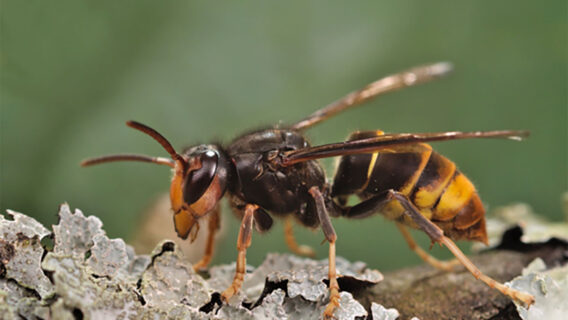
Invasive alien species are one of the most significant and rapidly growing threats to biodiversity worldwide. Across ecosystems, they disrupt ecological processes, outcompete native species and can drive irreversible changes to habitats and livelihoods. Recent global assessments highlight the scale of this challenge. The IPBES Thematic Assessment Report found that invasive alien species have contributed to approximately 60% of recorded global extinctions and were the sole driver in around 16% of them. Their impacts are already visible across Europe, where increasing trade, travel and climate pressures are accelerating introductions and spread, often faster than systems can respond.
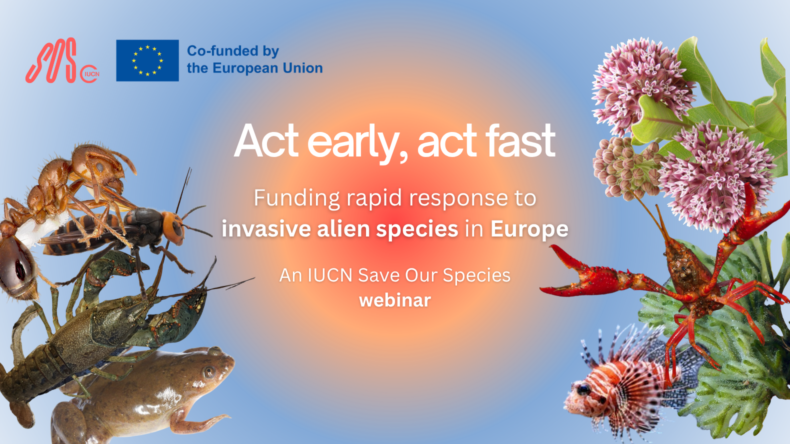
To explore how earlier, faster and more coordinated action can change this trajectory, IUCN Save Our Species hosted a dedicated webinar:
Act early, act fast: funding rapid response to invasive alien species in Europe
This webinar took place on 20 May 2026
This session brought together leading experts and practitioners working on the frontlines of invasive alien species management. Through practical case studies and an interactive panel discussion, we examined what enables effective rapid response in real-world conditions, from early detection and decision-making to financing and implementation. The webinar will also introduced the European Invasive Alien Species Rapid-Response Fund, supporting targeted action across the region.
Key messages:
Solutions already exist. The challenge now is scaling them through stronger coordination, political will, investment and rapid action before impacts become irreversible.
- Early detection remains the strongest line of defence against invasive alien species. New tools and approaches are emerging across Europe, including eDNA monitoring, AI-supported detection methods, citizen science networks and early alert systems. However, speakers highlighted the continued need for more structured monitoring schemes and long-term surveillance systems.
- Rapid response requires acting under uncertainty. Waiting for complete evidence can delay action until invasions become unmanageable. Decisions often need to be based on ecological risk assessments and the best available science rather than fully documented impacts.
- Feasibility assessments are critical before intervention. Successful rapid response projects depend on assessing ecological value, likelihood of success, available methods, public support, legal barriers and operational feasibility from the outset. Even when eradication is not possible, these assessments help identify alternative management pathways.
- Communication and public engagement are central to invasive alien species management. Speakers stressed the importance of transparency, early stakeholder engagement and clearly communicating ecological impacts to build public understanding and support, particularly where management actions may be controversial.
- Cross-border collaboration is essential. Invasive alien species do not respect political boundaries. Effective responses require cooperation between countries, agencies and local actors, supported by knowledge sharing, early coordination and practical networks. Existing relationships and communication channels can significantly accelerate action.
- Impacts extend beyond biodiversity. Case studies highlighted ecological, economic and livelihood impacts, including major effects on fisheries from lionfish invasions and threats to native species and ecosystem functioning from bullfrogs. Preventing invasions helps avoid wider social and economic costs.
- Targeted funding mechanisms can unlock action. The European Invasive Alien Species Rapid-Response Fund enables practitioners to act quickly, support species beyond existing regulatory lists, expand monitoring efforts and mobilise field operations that would otherwise not be possible.
- Partnerships and collective action underpin success. A recurring message throughout the discussion was that no single organisation or country can address invasive alien species alone. Strong partnerships, shared knowledge and coordinated responses are essential to prevent impacts from becoming irreversible.
Speakers:
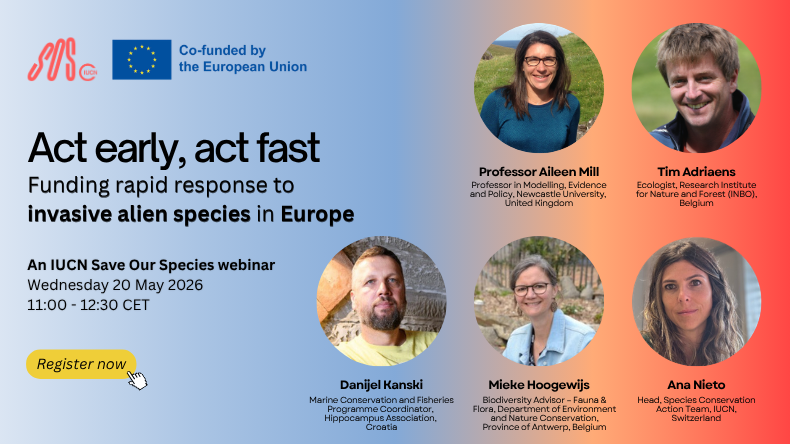
Facilitator:
- Professor Aileen Mill, Professor in Modelling, Evidence and Policy, Newcastle University, United Kingdom
Speakers:
- Tim Adriaens, Ecologist, Research Institute for Nature and Forest (INBO), Belgium
- Mieke Hoogewijs, Biodiversity Advisor – Fauna & Flora, Department of Environment and Nature Conservation, Province of Antwerp, Belgium
- Danijel Kanski, Marine Conservation and Fisheries Programme Coordinator, Hippocampus Association, Croatia
- Ana Nieto, Head, IUCN Species Conservation Action Team, Switzerland