Reconnecting two of Madagascar’s flagship parks with 150 ha of native forest
Project description
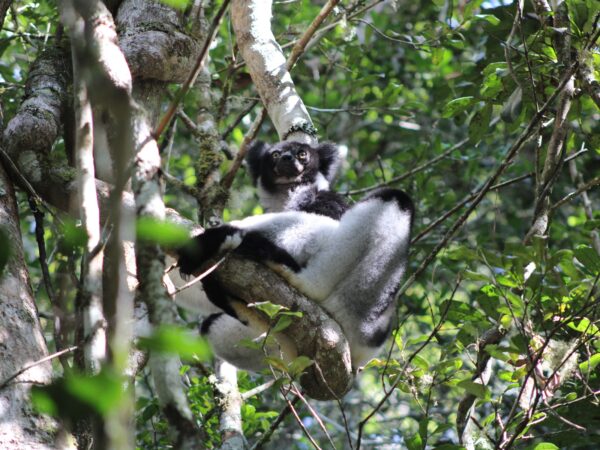
This project is restoring a 150-hectare native forest corridor to reconnect two of Madagascar’s most important protected areas: Mantadia National Park and Analamazaotra Special Reserve. Together, these forests shelter exceptional biodiversity, including 12 species of lemurs, many of which are Endangered or Critically Endangered, making them among the most threatened mammals on Earth.
Decades of deforestation dating back to the 1960s severed the ecological link between these protected areas, leaving wildlife populations isolated across a roughly 6-kilometre deforested gap. This fragmentation has restricted species movement, reduced genetic exchange and increased vulnerability to environmental and human-driven pressures.
Threats

Habitat loss & degradation

Over-exploitation of natural resources & prey depletion

Reduced genetic diversity
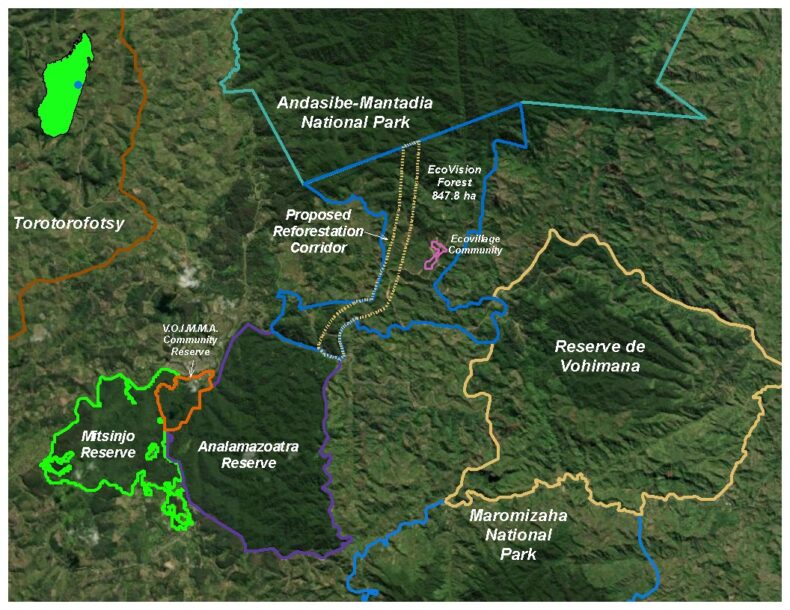
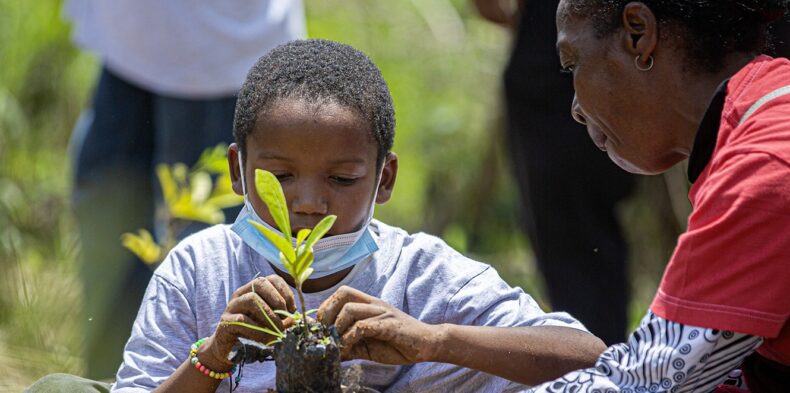
Since the project’s launch, significant progress has been made. To date, 105,500 native seedlings representing more than 100 indigenous tree species have been planted across 70 hectares, laying the foundation for a resilient and biologically rich forest corridor. With continued support from the IUCN Save Our Species Lemurs fund, the project will complete planting at a density of 1,500 native seedlings per hectare, fully restoring the corridor by December 2027. Once established, this reforested landscape will enable wildlife to safely move between protected areas, strengthen ecosystem connectivity and contribute to the long-term survival of Madagascar’s unique and irreplaceable species.
This project is implemented by The Mad Dog Initiative.
Project objectives
The project aims to restore ecological connectivity while generating lasting benefits for both wildlife and local communities. Its objectives are to:
- Reforest 80 hectares of degraded land by planting 1,500 native tree seedlings per hectare, using a diverse range of indigenous species adapted to Madagascar’s montane rainforests.
- Create a functional native forest corridor reconnecting two key protected areas, enabling the movement and long-term survival of some of the world’s most endangered wildlife populations, including lemurs.
- Employ and train ten local community members to prepare restoration sites and carry out large-scale native tree planting, strengthening local stewardship and technical capacity.
- Support local native seedling nurseries, reinforcing sustainable supply chains for high-quality, locally sourced planting material.
- Facilitate community-based ecotourism and research initiatives that generate long-term livelihood opportunities, while producing applied knowledge to improve and scale reforestation approaches in Madagascar’s montane rainforest ecosystems.
Project activities
- Native seedling collection, propagation and planting
Collect seeds from locally occurring tree species, grow native seedlings in partner nurseries, and carry out large-scale planting across degraded areas to restore montane rainforest habitat. - Scientific monitoring and applied research
Conduct extensive scientific research using cutting-edge ecological and monitoring techniques to optimise native reforestation approaches in Madagascar’s montane rainforests, and to identify when and how native wildlife begins to use regenerating forest areas. - Community employment and capacity building
Provide long-term employment opportunities for dozens of rural community members, supporting land preparation, planting, maintenance, and monitoring activities, while building skills and offering stable income in areas with limited access to formal employment.