When we think of biodiversity hotspots, rainforests and coral reefs often come to mind. Yet some of the planet’s richest and most threatened ecosystems flow quietly through our landscapes and into the open ocean: our rivers, lakes, wetlands and seas.
On 17 January 2026, a historic new chapter opened for global conservation with the entry into force of the Agreement on the Conservation and Sustainable Use of Marine Biodiversity Beyond National Jurisdiction (BBNJ Agreement), creating the first comprehensive, legally binding framework to protect life on the high seas, nearly half of the planet’s surface.
But protecting biodiversity beyond national borders begins far upstream.
Freshwater ecosystems cover less than one per cent of the Earth’s surface, yet they support nearly ten per cent of all known species. Together with the high seas, these connected waters sustain migratory fish, sharks, rays, shorebirds and countless other species whose survival depends on healthy ecosystems from headwaters to the open ocean.
Today, both freshwater and marine biodiversity are declining at unprecedented rates.
A crisis across connected waters
From mountain streams to open seas, species are declining at alarming rates:
- 🐟 Nearly one-third of all freshwater species assessed on the IUCN Red List are now threatened with extinction.
- ⬇️ Freshwater vertebrate populations have fallen by more than 80% on average over the past 50 years.
- 💧 Wetlands are disappearing three times faster than forests, reducing natural flood protection and vital habitats.
- 🌊 Only one-third of the world’s long rivers remain free-flowing, limiting migration routes for fish and other aquatic species.
- 🦈 At sea, over one-third of sharks and rays are threatened, driven largely by overfishing, bycatch and habitat loss.
- 🧴 Plastic has now been recorded in the deepest ocean trenches and in the stomachs of marine species, while warming waters and acidification are reshaping marine ecosystems far from shore.
These crises are deeply linked. Rivers carry nutrients, sediments and life from mountains to oceans. Many species move between freshwater, coastal and marine ecosystems during their life cycles. What happens upstream shapes the fate of species far offshore.
Conservation in action: protecting species along the water continuum
Across its freshwater and marine portfolio, IUCN Save Our Species (SOS) supports practical, science-based action that spans borders and ecosystems.
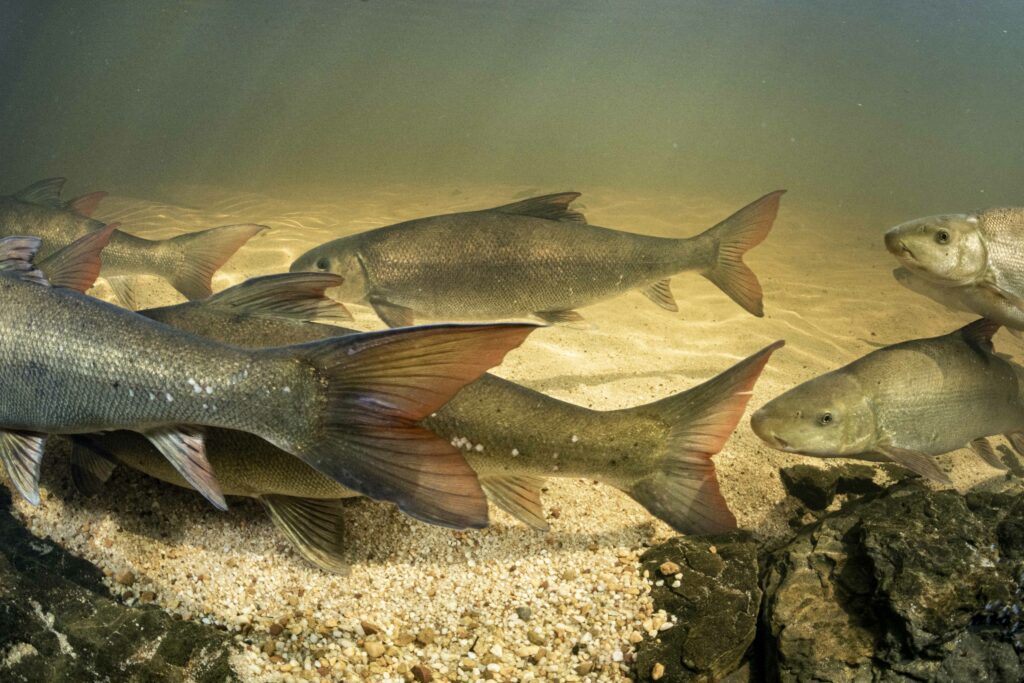
Reviving endemic fishes in South Africa: In the Fynbos region, the Freshwater Research Centre is restoring streams that harbour fish found nowhere else on Earth. By removing invasive species, rehabilitating habitats and working with landowners and communities, native populations are beginning to recover, protecting biodiversity at its source.
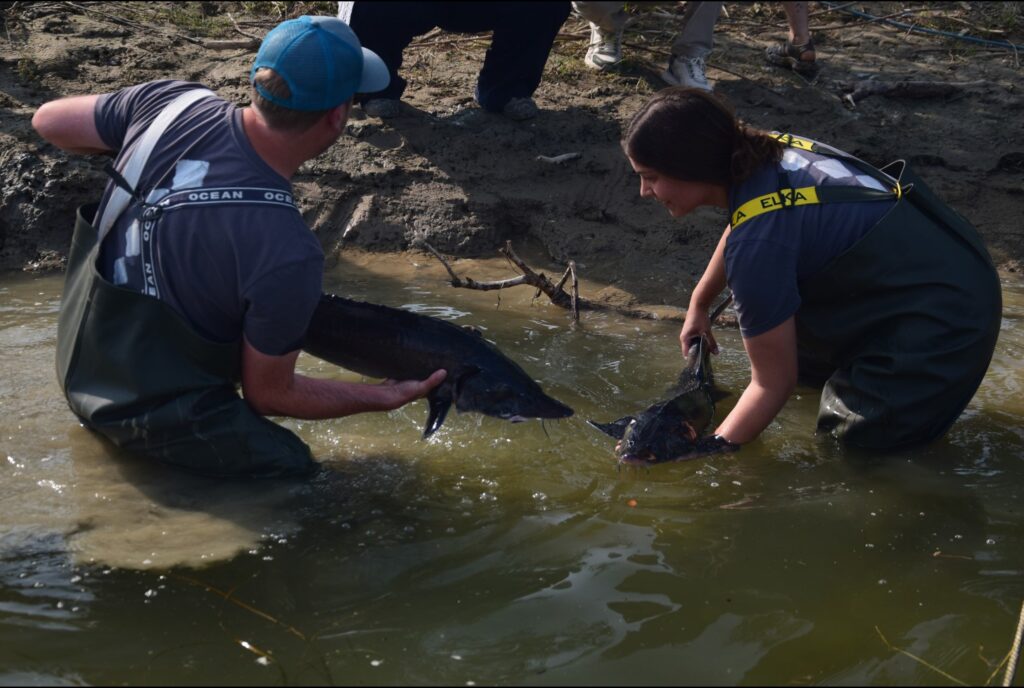
Saving ancient sturgeons in Europe and beyond: Sturgeons, among the world’s most threatened animals, depend on free-flowing rivers and connected migratory routes. SOS Sturgeons-supported hatcheries, genetic conservation and habitat restoration are helping species return to rivers, rebuilding populations that link rivers to seas.
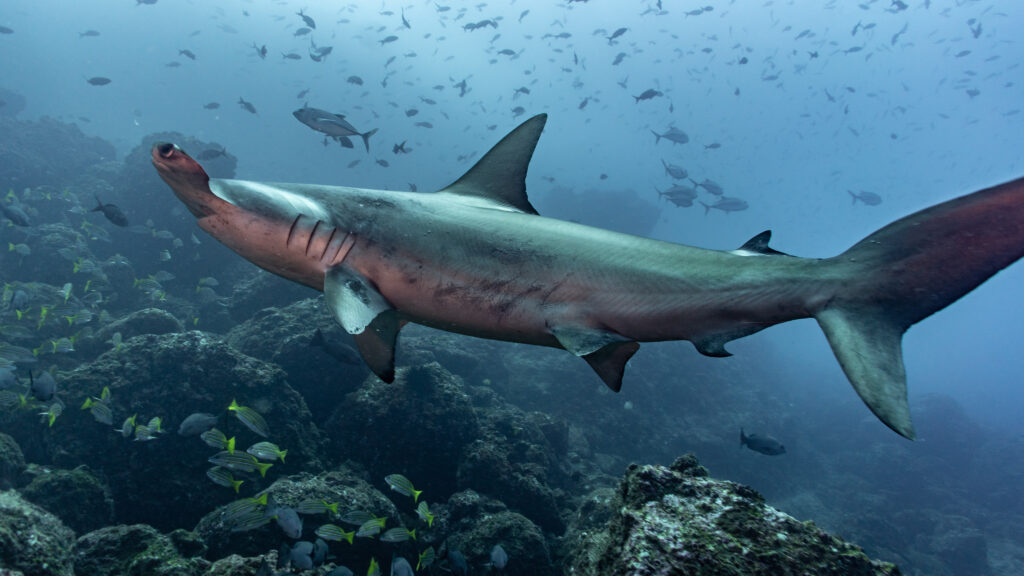
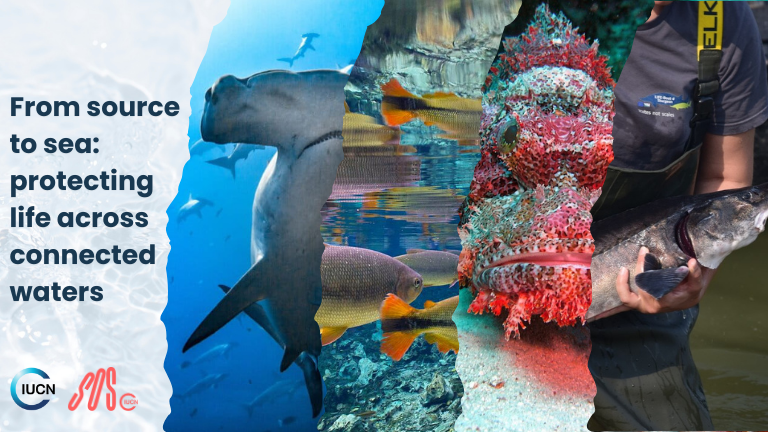
Protecting migratory sharks in Costa Rica: In Costa Rica’s Golfo Dulce, Misión Tiburón is working with coastal communities to safeguard nursery habitats of the Critically Endangered scalloped hammerhead shark, a migratory species that regularly moves between national waters and the High Seas.
The power of global collaboration
Protecting connected waters requires coordinated action across borders, sectors and ecosystems, and momentum is growing.
- The BBNJ Agreement now provides a new legal framework and tool for establishing marine protected areas, assess environmental impacts and share benefits on the high seas, strengthening protection for migratory and wide-ranging species.
- The IUCN SSC Freshwater Fish Specialist Group connects experts across continents to guide conservation of threatened freshwater fishes and coordinate recovery efforts from rivers to estuaries.
- The Freshwater Challenge, launched at the UN Water Conference, has become one of the world’s largest restoration initiatives, with countries committing to restore 300,000 km of rivers and reconnect 350 million hectares of wetlands — strengthening ecosystems that ultimately feed into healthy seas.
- SHOAL’s 1,000 Fishes programme brings together organisations worldwide to fast-track conservation for the most threatened freshwater species, many of which are vital to coastal and marine food webs.
Learning from freshwater conservation
To share lessons from the front lines of freshwater conservation, IUCN Save Our Species recently hosted the webinar “Safeguarding freshwater species through collective action.”
Experts from around the world discussed how science, partnerships and local action are helping reverse declines in rivers and wetlands, and what this means for protecting connected ecosystems downstream.
A growing threat to freshwater species: invasive alien species in Europe
Invasive alien species (IAS) are one of the fastest-growing threats to freshwater biodiversity in Europe. Introduced through trade, travel and climate change, non-native plants and animals can outcompete native species, degrade habitats and disrupt river and wetland ecosystems.
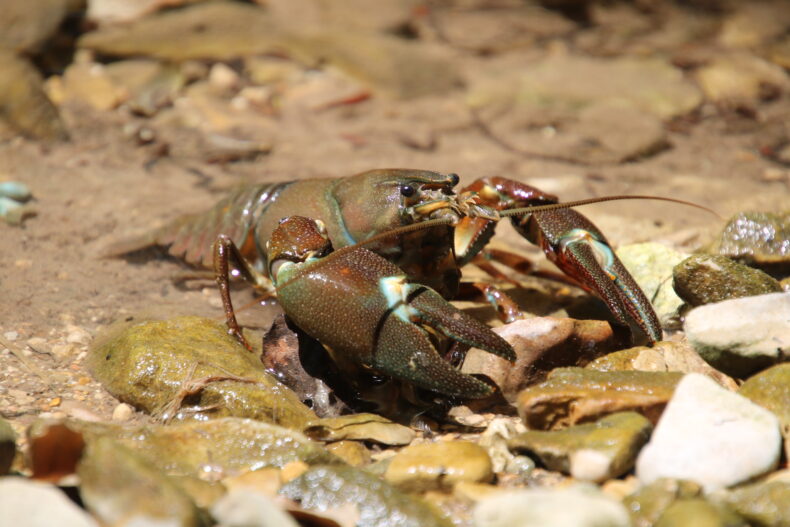
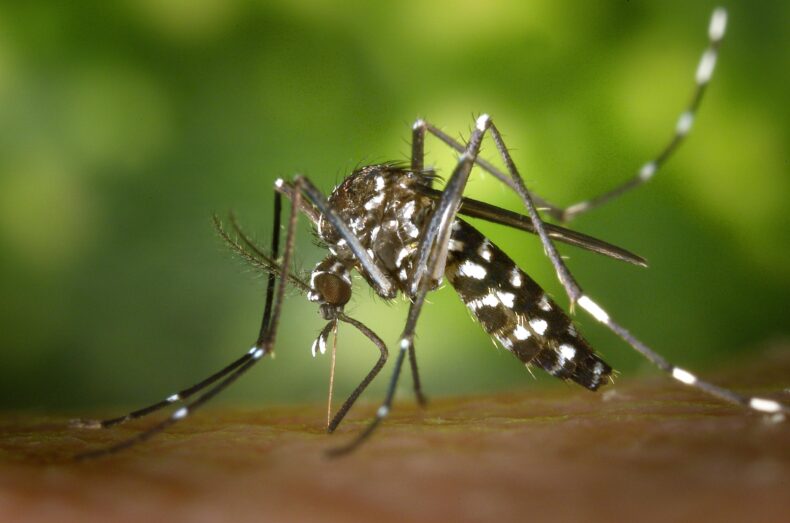
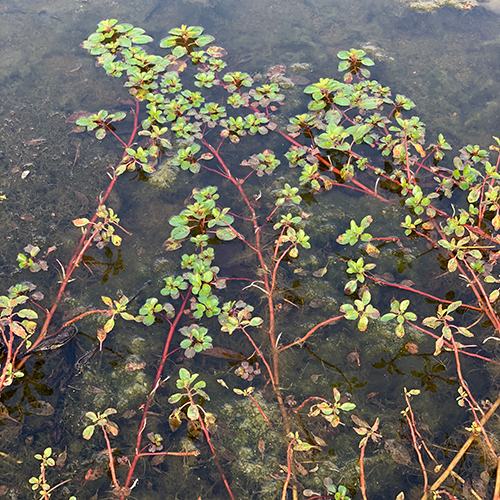
Well-known freshwater invasives include:
- the signal crayfish, which spreads disease and displaces native crayfish,
- the Asian tiger mosquito, which breeds in wetlands and urban waters, and
- invasive plants such as water primrose and floating pennywort, which choke rivers and lakes.
To address this urgent challenge, IUCN Save Our Species is implementing the European IAS Rapid-Response Fund, co-funded by the European Union. The fund provides fast-track grants for early detection and rapid eradication, stopping new invasions before they become long-term ecological and economic crises.
The call for proposals is open until 10 February 2027.
How you can help
Protecting connected waters requires collective action:
- Support SOS projects protecting freshwater and marine species
- Advocate for river, wetland and ocean protection
- Share these stories and raise awareness
Every river restored and every marine area protected strengthens the web of life that links land, water and ocean. Together, we can secure thriving ecosystems, from rivers to the high seas.