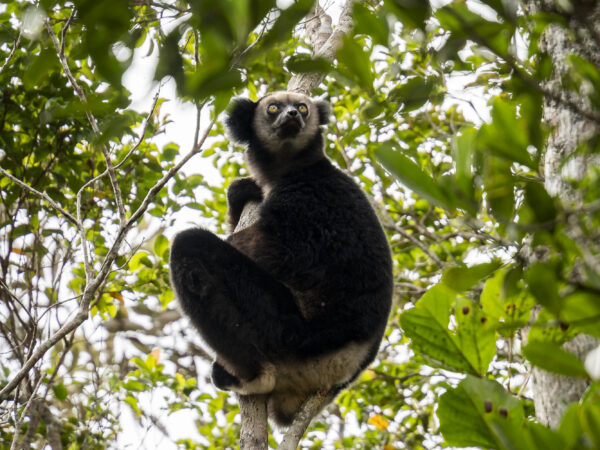
Protecting lemur diversity in Anjanaharibe-Sud Special Reserve in Northeast Madagascar
Project description
This project is working to safeguard threatened lemur species in the Anjanaharibe-Sud Special Reserve (ASSR) in north-eastern Madagascar, a biodiversity hotspot that hosts at least 12 lemur species, including four Critically Endangered taxa. Despite its ecological importance, ASSR faces growing pressure from habitat degradation, illegal mining, hunting and forest clearance driven by poverty and food insecurity in surrounding communities.
Threats

Climate change

Habitat loss & degradation

Over-exploitation of natural resources & prey depletion
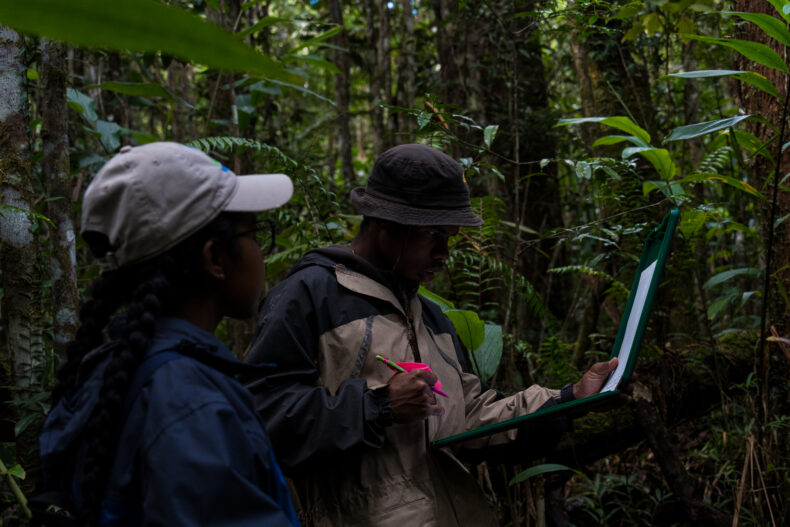
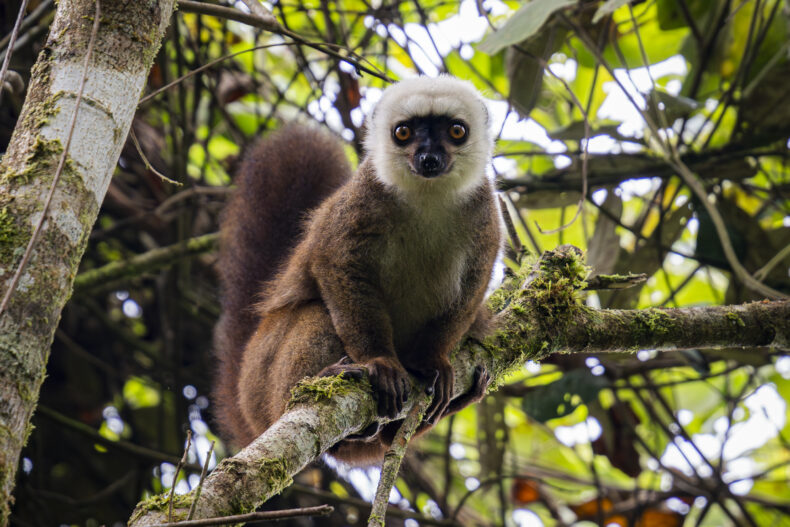
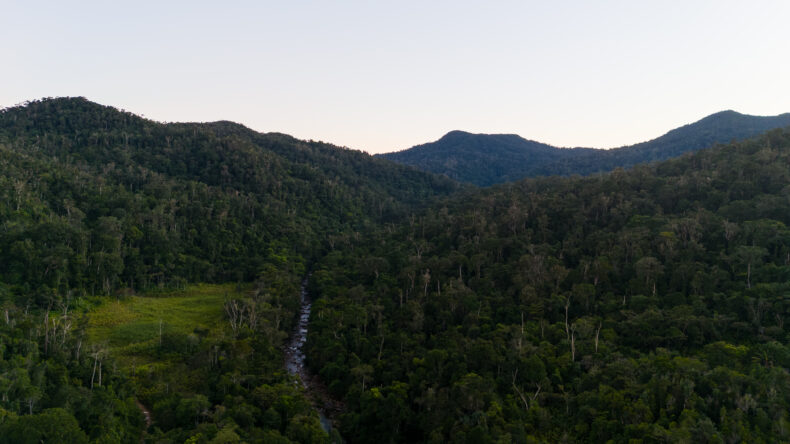
To address these interconnected challenges, the project applies a community-centred conservation approach that links biodiversity protection with sustainable livelihoods. Activities combine biodiversity monitoring and environmental education with food security initiatives and habitat restoration. Interventions include conservation education for children and adults, the development of alternative protein sources through edible insect farming and community gardens, and the restoration of degraded buffer zones through native tree nurseries and the establishment of forest corridors. By reducing dependence on forest resources and restoring ecological connectivity, the project strengthens community resilience, enhances habitat quality and supports the long-term recovery of endangered lemur populations and the ecosystems of Anjanaharibe-Sud.
This project is implemented by Wildlife Madagascar.
Project objectives
The project aims to protect lemur populations and restore forest ecosystems in Anjanaharibe-Sud Special Reserve by tackling the social and ecological drivers of biodiversity loss. Its objectives are to:
-
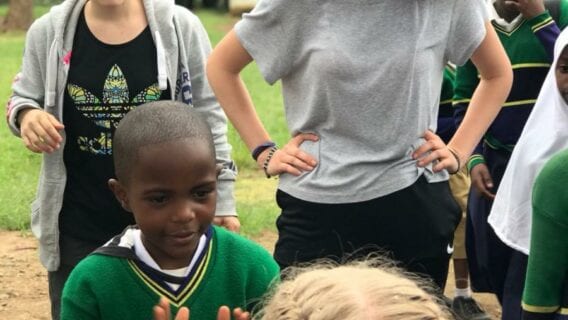
Expand access to environmental education for children and adults, strengthening local knowledge, pride and long-term stewardship of biodiversity.
-
Improve food security through sustainable and culturally appropriate livelihoods, including edible insect (sakondry) farming and community gardens, reducing reliance on bushmeat and destructive land-use practices.
-
Restore degraded habitats and reconnect fragmented forests by scaling up reforestation along the reserve’s southern boundary and establishing forest corridors to support species movement and ecological resilience.
Together, these integrated actions reduce human pressure on critical habitats, enhance livelihoods and support the recovery of endangered lemurs while strengthening community engagement in conservation.
Project activities
- Monitor lemur populations and strengthen field patrols to track population trends, detect illegal activities and inform adaptive conservation management.
- Deliver conservation education and expand learning infrastructure, including the construction of a new school, to increase access to environmental education for children and adults.
- Restore degraded habitats and scale up native tree nurseries, establishing a new nursery and expanding existing ones to support reforestation and the creation of forest corridors.
- Promote sustainable food security solutions, including edible insect farming and community gardens, to reduce dependence on bushmeat and unsustainable land-use practices.
- Strengthen community capacity and participation through training, workshops and participatory management, fostering long-term stewardship and ecosystem resilience.