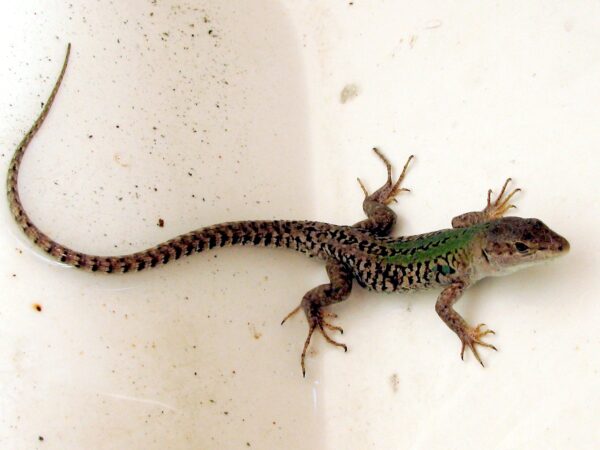
Protecting endemic lizards from invasion in Chania, Crete (Greece)
Project description
The Italian wall lizard (Podarcis siculus) is an invasive species that is rapidly expanding its range across Europe. It has recently been detected in Chania, Crete, where it coexists with the endemic Cretan wall lizard (Podarcis cretensis), raising concerns about potential impacts on native biodiversity.
Threats

Invasive alien species
Studies have shown that P. siculus can outcompete native lizard species through competition for resources, behavioural interference, hybridisation and predation. This project aims to act early to eliminate the newly established population before it becomes widespread.
Alongside eradication efforts, the project will investigate the origin of the population using genetic analysis to better understand introduction pathways. The results will support improved prevention strategies and inform future management of invasive reptiles. Long-term monitoring will be carried out in collaboration with national authorities to ensure continued protection of native species.
This project is implemented by the University of Crete.
Project objectives
The project aims to eradicate the invasive population of Podarcis siculus in Crete before it becomes established and threatens native species. It seeks to assess the origin of the population through genetic analysis, helping to identify possible introduction pathways.
The project also aims to support long-term monitoring and prevention efforts through collaboration with national authorities.
Finally, it aims to raise awareness and build capacity around invasive species management and biodiversity conservation.
Project activities
- Carry out targeted eradication: Conduct multiple field visits to capture and remove individuals.
- Perform genetic analyses: Analyse samples to determine the origin and pathways of introduction.
- Engage the public and raise awareness: Organise outreach events at the Natural History Museum of Crete.
- Provide training on invasive species monitoring: Deliver workshops to build local capacity in biodiversity conservation.