Pollinators are disappearing across Europe. A new wave of youth-led action is pushing back.
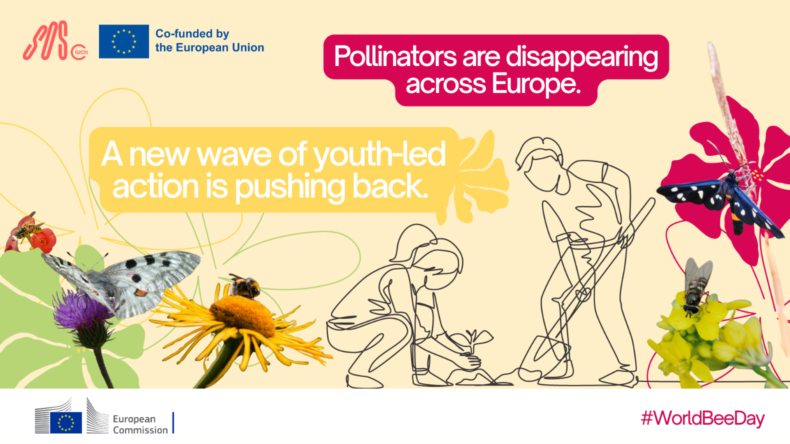
Across Europe, pollinators are in decline, posing a threat to the ecosystems and food systems that depend on them. But a cohort of young conservationists is responding with practical actions that are locally relevant, hands-on and focused on pollinator recovery.
Through the European Fund for Youth Action on Pollinators, co-funded by the European Union and implemented by IUCN Save Our Species, youth-led organisations and individuals are implementing solutions on the ground. From restoring habitats and trialling new monitoring methods to supporting community-led conservation planning, these projects are addressing pollinator decline from multiple angles.
Different contexts, different approaches, but a shared focus: better data, better habitats and stronger public involvement towards improved pollinator conservation.
Getting a clearer picture of what’s happening to pollinators
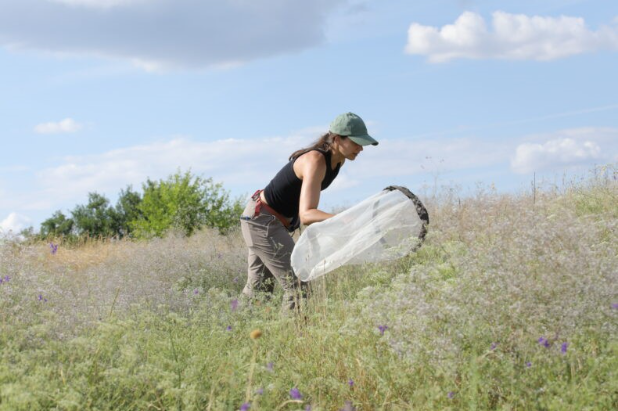
One of the biggest constraints to effective conservation remains surprisingly basic: we still don’t have a complete picture of many pollinator species across Europe. Several projects are working to close that gap.
In Italy, POLLIN-RED combines field surveys with genetic tools to strengthen conservation assessments and feed results into policy. In Croatia, eDNA for Pollinators is testing whether DNA-based methods can complement traditional monitoring, potentially transforming how species are detected. In Spain, a project on insecticide use examines how post-bloom insecticide applications affect wild pollinators, combining field data and chemical analysis to advocate for more pollinator-friendly farming practices.
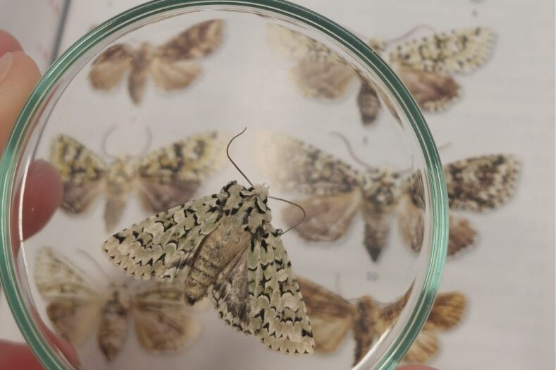
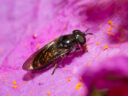
Other initiatives focus on species that have largely gone under the radar. In Greece, research on Merodon longisetus, a Critically Endangered hoverfly, is helping locate remaining populations and understand its ecology, while a project on Nomioides chalybeatus, a threatened bee species on the eastern Aegean island of Lesvos, is improving knowledge of its distribution and threats, and the Moths of Epirus project is documenting an overlooked group of pollinators in a poorly studied region.
At the same time, foundational datasets are being built where they have long been missing. In Austria, the BeeDisCo project and the Kaunergrat biodiversity hotspot project are compiling up-to-date data on wild bees diversity in under-studied landscapes. In Spain, research on butterfly–flower interactions is examining how land-use change, including afforestation, reshapes pollinator communities and their resources.
Forest and urban ecosystems are also coming into focus. In Italy’s Foreste Casentinesi National Park, research on saproxylic and forest hoverflies is shedding light on species that depend on deadwood and mature trees, and therefore on healthy, structurally complex forests. Building on this, the Austrian project Hoverflies in the city is asking whether urban green spaces can still provide suitable conditions for these highly specialised species. Together, these projects will help advance the implementation of the dedicated EU Species Action Plan for Hoverflies specialised to veteran trees in Europe, translating its priorities into on-the-ground action.
Alongside fieldwork, the SEN-PollColl project in Spain is strengthening the foundations by digitalising pollinator collections and improving access to existing data, ensuring that knowledge can be used rather than remain fragmented.
Some projects are also contributing directly to conservation assessments, with TeaselBees in Austria feeding into the European Red List of Bees, and POLLIN-RED supporting the development of Italy’s first National Red List of Hoverflies.
Together, these efforts are filling critical gaps, from species-level ecology to large-scale patterns, and making that knowledge more accessible for those working to protect pollinators.
Restoring habitats where pollinators are under pressure
Habitat loss remains one of the main pressures on pollinators, and several projects are focusing on improving conditions where they are most needed, often in places where people and pollinators closely interact.
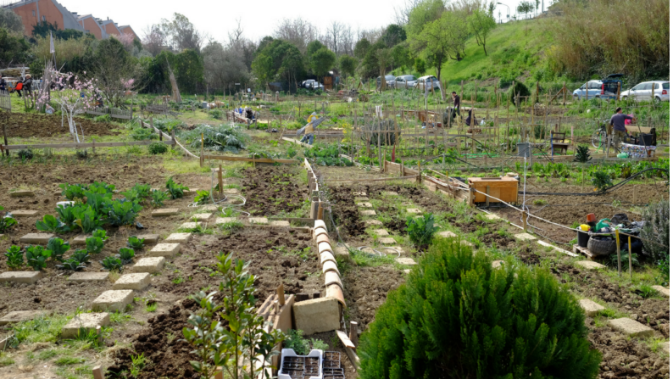
In urban environments, a project in Spain is exploring how to design effective bee refuges, while the Horti urbis project in Rome looks at how everyday gardening practices influence pollinator diversity. The aim is simple: understand what works in urban settings and make it easier to apply elsewhere.
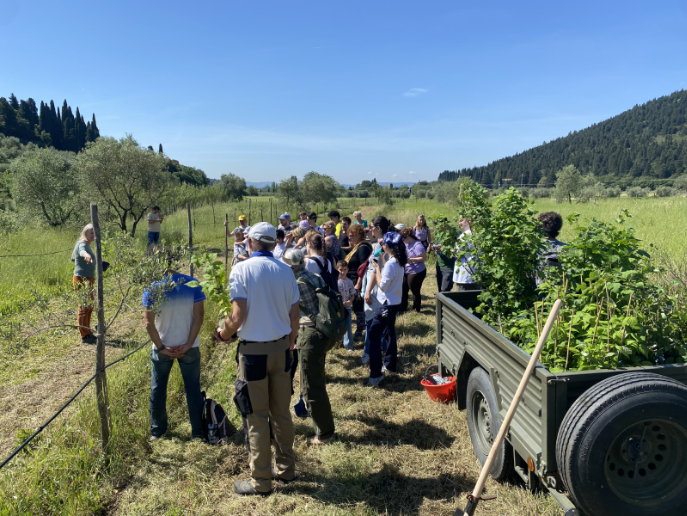
Beyond cities, other initiatives are working within productive landscapes. In Italy, the NECTAR (Nurturing Ecology, Communities and Training for Agroecological Resilience) project combines habitat restoration with agroecology training, supporting farmers to adopt practices that benefit both pollinators and livelihoods and educating citizens about agrobiodiversity conservation. In Portugal, the Flor-em-Flor project links river ecosystem restoration with pollinator recovery, bringing together monitoring, habitat work and community involvement.
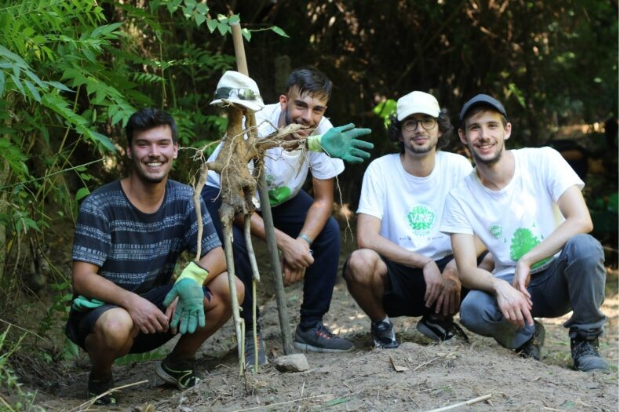
Several projects are also creating small-scale demonstration sites that show what pollinator-friendly spaces can look like in practice. In Romania, the Pollinator Haven project is establishing a youth-led garden rooted in traditional practices, while in Germany, the Butterflies’ garden project combines habitat creation with hands-on learning for local communities. In the Netherlands, The Butterfly Effect NL is taking a similar approach through school gardens, turning everyday spaces into refuges for pollinators.
Some initiatives focus on highly specific habitat needs. In Spain, efforts to restore wet meadow ecosystems are supporting the recovery of the dusky large blue, a butterfly species with very specialised ecological requirements.
Across these projects, the emphasis is consistent: practical interventions that can be tested, adapted and repeated. Rather than large-scale, top-down restoration, the focus is on solutions that work at a human scale, in cities, farms and community spaces, where change can happen quickly and visibly.
Focusing on species at risk and specialised pollinators
Not all pollinators respond to broad conservation measures. Some depend on very specific plants or habitats, which makes them particularly vulnerable and easy to overlook. Several projects in this cohort focus on exactly these kinds of species, where targeted action can make a real difference.
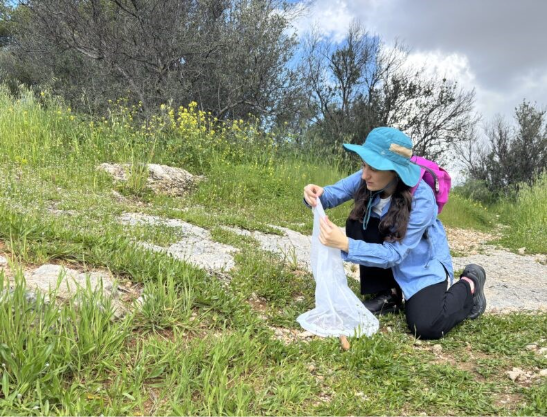
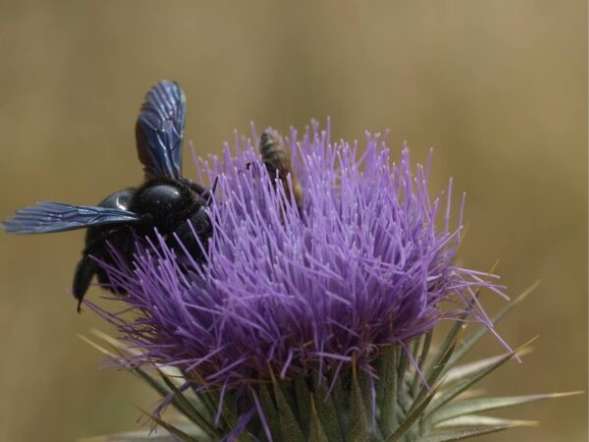
A clear example is the group of bees that rely on teasel plants. Across Italy, Greece, Austria and Hungary, three complementary projects are working to better understand and protect these specialists. In Italy, research is exploring the conservation and monitoring of teasel-plant specialised bees, while in Greece, TEASEL BEE-ATLAS is mapping their distribution and involving youth, farmers and the general public in awareness activities. Taking a cross-border approach, TeaselBees in Austria and Hungary combines field surveys and data analysis to identify key habitats and inform conservation planning.
This work directly supports the EU Species Action Plan for Teasel-plant bees, which sets out priority measures to address their decline, driven largely by habitat loss and the disappearance of teasel-rich grasslands across Europe.
By zeroing in on species with narrow ecological requirements, these projects are addressing gaps that broader approaches often miss.
Mobilising communities and building long-term engagement
Across the portfolio, one thing stands out: a consistent, long-term commitment to working with people. Engagement of communities and youth is built into the work from the start, whether through hands-on activities, education or advocacy.
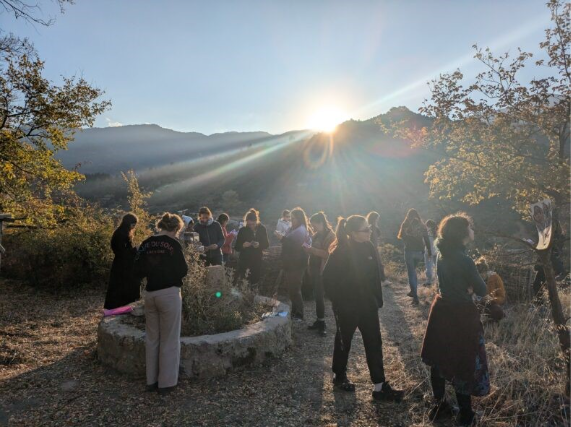
In several countries, citizen science is being used to bring people closer to pollinators in a practical way. Projects like Syrph the City in Germany and Mesola Pollinators in Italy are giving participants the tools to observe, identify and monitor species themselves, turning curiosity into something more sustained. Others focus on building communication and advocacy skills. Buzzing Futures, spanning Austria and France, is supporting young people to lead their own outreach and campaigns, helping translate technical conservation work into messages that resonate more widely.
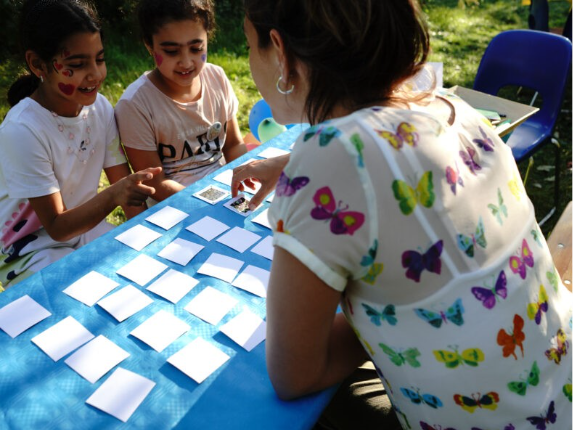
Education is another strong thread. In Bulgaria, Generation Alpha: Guardians of the wild bees is developing creative, accessible tools to engage younger audiences early on. In Belgium, BeeDefenders takes a different route, using an interactive board game to make pollinator conservation tangible and collaborative. Meanwhile in Slovakia, Buzz for Change brings several of these elements together, combining habitat restoration, citizen science and advocacy to empower young people to influence conservation practices locally.
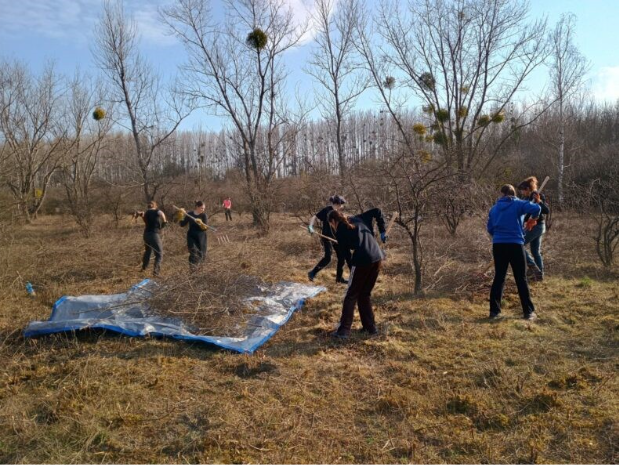
What ties these approaches together is a shift in how conservation is delivered. Rather than raising awareness from a distance, these projects create direct entry points for people to get involved, to learn, contribute and, in many cases, take ownership of the work itself.
Backing the next generation of conservation practice
Taken together, the projects show a shift in how pollinator conservation is being approached: more local, more practical and more closely tied to how people interact with landscapes.
They also reflect a deliberate investment in early-career practitioners. Beyond funding, grantees will be connected through a peer network, with opportunities to exchange experience and build skills over the course of their projects.
Pollinator decline continues to affect ecosystems, agriculture and livelihoods across Europe. What this cohort demonstrates is that solutions do not have to be large-scale to be effective, they need to be tested, shared and adapted.
And increasingly, they are being led by those ready to carry them forward.
Learn more about the Fund: