
Eradication of the Oriental turtle dove in its only non-native location in Europe
Project description
The Oriental turtle dove (Streptopelia orientalis) is native to East Asia but has been recorded since 2012 around the Nové Mlýny Reservoirs in the Czech Republic — the only confirmed site in Europe where it currently breeds outside its natural range. Early observations of ringed individuals confirmed an origin from captive or introduced birds. Since then, regular monitoring has documented a growing number of individuals and repeated breeding attempts, demonstrating that a small but established population is now present in the wild.
Threats

Invasive alien species


As a non-native species with invasive potential, the Oriental turtle dove may pose risks to native bird communities. Of particular concern is its close relationship with the European turtle dove (Streptopelia turtur), a species that has experienced marked declines across Europe. The establishment of a closely related non-native species raises the risk of competition for resources, hybridisation and other ecological interactions that could further undermine the conservation and recovery of this Vulnerable native bird. Continued monitoring and timely management are therefore essential to safeguard native biodiversity.
This project is implemented by the Czech Society for Ornithology – South Moravian Branch.
Project objectives
The project aims to achieve the complete eradication of the Oriental turtle dove from the Nové Mlýny Reservoirs area before the population spreads further. Acting at this early stage of invasion will help prevent wider establishment and minimise risks to native bird species, particularly the threatened European turtle dove.
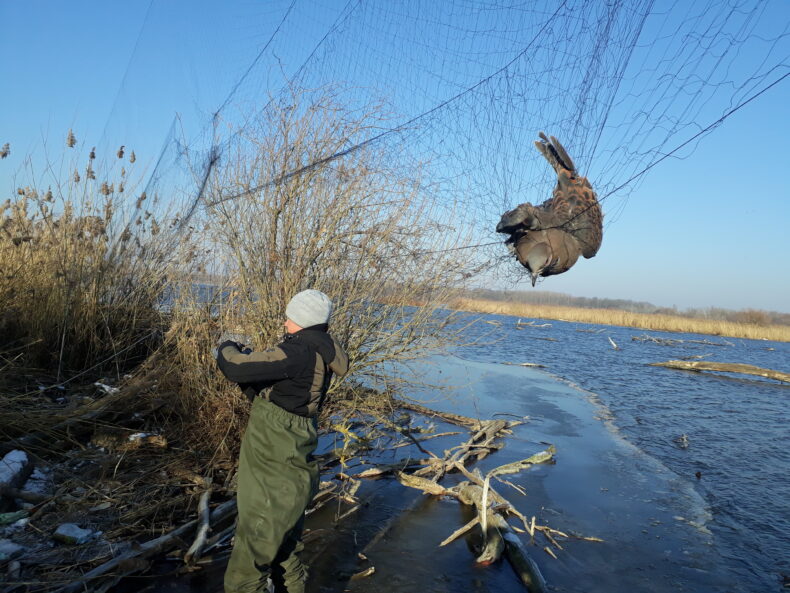
To achieve this, the project will implement a targeted and adaptive eradication strategy combining fixed trapping devices, ornithological mist-netting and, where necessary, controlled shooting, in full compliance with national legislation and animal welfare standards.
The intervention builds on a long-term monitoring programme that has documented the species’ presence, breeding success and population trends in the area, ensuring that management actions are timely, science-based and effective.
Project activities
- Systematic monitoring: Continuous surveillance of the Oriental turtle dove population, including monitoring communal roosts and identifying key locations during both breeding and non-breeding seasons to guide targeted action.
- Identification and preparation of trapping sites: Selection and preparation of priority sites, installation of fixed trapping devices with bait, and deployment of temporary ornithological mist nets to enable flexible and responsive interventions.
- Targeted management actions: Humane removal of captured individuals in line with approved veterinary procedures. Where trapping proves insufficient, additional authorised control measures will be applied in full compliance with national legislation and animal welfare standards.
- Stakeholder engagement and communication: Ongoing coordination with landowners, municipalities and relevant authorities, including regular information-sharing on project activities, results, and best practices to ensure transparency and support.