On the brink: an expert perspective on saving the Canary Islands large white (Pieris cheiranthi)
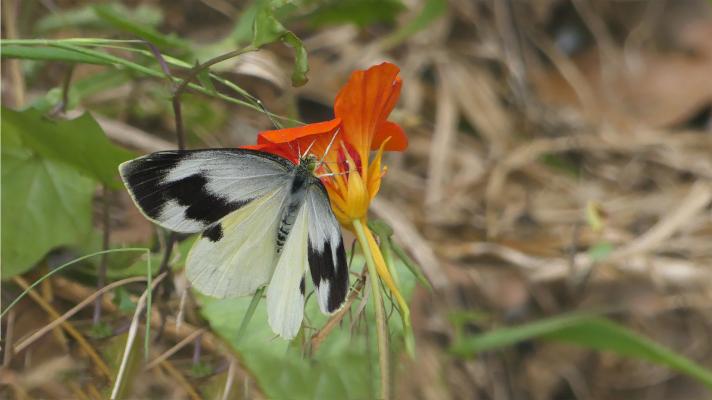
Pollinators play a crucial role in ecosystems and agriculture, supporting biodiversity and food production across Europe. Yet many pollinator species are declining rapidly due to habitat loss, climate change and other pressures. One species raising growing concern is the Canary Islands large white (Pieris cheiranthi), an endemic butterfly from the Canary Islands that depends on native plants and laurel-forest ecosystems.
Recent research suggests that this species may already have disappeared from parts of its historical range. To better understand the situation and the actions needed to protect it, we spoke with Yeray Monasterio León, a researcher specialising in butterfly ecology and conservation in the Canary Islands, and one of the authors of Canarian Islands Pollinators Action Plan. His work focuses on the conservation of endemic lepidoptera and the ecological pressures affecting island pollinators.

Question: Based on recent evidence, including the publication suggesting a possible extinction on Tenerife, what is the currently known distribution and population status of Pieris cheiranthi across the Canary Islands?
Yeray Monasterio León: Historical evidence indicates that Pieris cheiranthi persisted on La Gomera until 1979, when it went extinct there. Since then, it was considered a Canary endemic occurring only on La Palma and Tenerife. Based on the work carried out, especially in 2025, the species now appears to be restricted to La Palma, where its last confirmed population nucleus persists, placing it in a highly vulnerable situation. On Tenerife, our research points to a recent possible extinction, following an abrupt collapse documented from May 2023 onwards and the absence of any confirmed records since then, despite targeted searches. From that point, the population declined by 80%, according to our calculations, which is unprecedented over such a short period and therefore extremely alarming.
Question: What are the main factors driving the decline of Pieris cheiranthi (e.g., habitat loss, climate change, invasive species, land-use change), and how have these changed over the past decade?
Yeray Monasterio León: We consider the decline to be the result of a set of pressures acting synergistically rather than a single cause. it has been a very complex multifactorial event. The species was already severely weakened by habitat degradation and fragmentation in ravines and surrounding areas (together with land-use change), which reduced the continuity of suitable habitat and the availability of ecological refuges. In addition, for decades, an ecological trap has been operating, associated with a combination of invasive alien species: a South American host plant (Tropaeolum majus) and several parasitoid wasps that attack the vast majority of larvae and pupae when they feed on this exotic plant outside the laurel-forest habitat. The presence of Pieris rapae, an introduced and extremely abundant species in the Canary Islands, acts as an amplifier by facilitating the build-up of these parasitoids. Altogether, this has entailed a continuous removal of individuals and a genetic erosion that has severely weakened the species. Finally, the Canary Islands experienced an unprecedented drought, with its greatest severity in 2023-2025, which matches very closely the timing of the likely population collapse on Tenerife. This drought occurred, probably, when the species was at its weakest and, due to its intensity and persistence, likely caused the total loss of this unique subspecies.
Question: How do recent local threats compare with those identified in the IUCN Red List assessment that listed Pieris cheiranthi as Endangered? Are there new or more severe pressures than previously understood?
Yeray Monasterio León: The IUCN assessment already captured the structural risk factors: a very small range, few locations, and signs of decline. The key difference now is that we have observed that, very likely, these threats have materialised in the definitive collapse of the Tenerife population, leading to the extinction of a unique subspecies. All threats operating on Tenerife are also present on La Palma, which now functions as the sole reservoir of the species, so the risk of collapse on this island is also very high, especially if a new severe drought occurs or additional threats emerge.
In this context, the ongoing release of non-native parasitoid wasps for biological pest control is particularly worrying, as it represents a high-risk potential threat for the eggs and larvae of Pieris cheiranthi. There is also long-standing concern about the possible introduction of the European species Pieris brassicae, which could compete with and hybridise with P. cheiranthi, leading to genetic introgression that could be disastrous for the conservation of this endemic. Such an introduction could occur through imports from continental Europe, especially cabbage plants. This is a plausible risk, as something similar occurred in Madeira.
In short, with the earlier knowledge, an “Endangered” diagnosis was coherent, but recent evidence is consistent with a substantial increase in extinction risk: we now have the Tenerife collapse and the restriction to La Palma as the last refuge, as well as the risk of abrupt extinctions linked to shared threats and the role of extreme droughts. We currently consider that, under IUCN criteria, the appropriate category would be “Critically Endangered”.
Question: The EU Pollinators Initiative includes specific actions for Pieris cheiranthi in the Canary Islands. Which of these actions are already underway, and which are most urgently needed now?
Yeray Monasterio León: Some actions are already being promoted, particularly in terms of legal protection procedures, monitoring, and awareness-raising. The Asociación Española para la Protección de las Mariposas y su Medio (ZERYNTHIA) proposed legal protection for the species in Spain in 2022, but it was rejected. In March 2026, we sent a new proposal, more strongly justified, seeking the highest level of protection at the national level, called “in critical situation”. This is a priority, as it will facilitate public administration involvement and coordination among institutions.
Another major priority is stabilising the La Palma population, which declined by approximately 40 %, also according to our calculations, between 2023 and 2025, coinciding with the extreme drought. This requires habitat restoration, boosting the presence of the original host plants (Crambe spp.) and removing the exotic host plant (Tropaeolum majus), which generates an ecological trap and is associated with an unacceptable genetic erosion. In addition, it is essential to establish a breeding centre on La Palma, located within the habitat, to maintain a “rescue population” in case of a population crash similar to that observed on Tenerife. This should be carried out, in our opinion, with public funds, in a similar way to how the Iberian Lynx was recovered in Spain.
On the research side, we need a better understanding of how parasitoids affect eggs, larvae, and pupae, and we also need more precise knowledge of the distribution of the original host plants. Of course, work on Tenerife must also continue. The first priority in 2026 is to attempt to locate any remnant population. If any were found, a captive-breeding and recovery programme would need to be activated. In parallel, comprehensive habitat restoration and threat removal would be required, which is extremely complex: the invasive plant is widespread across northern Tenerife and, at present, there is no technology that allows the capture and eradication of invasive wasps. While these threats remain active, a reintroduction from La Palma does not appear realistic; moreover, La Palma holds a different subspecies that would not replace the Tenerife one, which would have been irreversibly lost.
Question: What have been the biggest challenges in implementing conservation measures on La Palma and Tenerife —for example, in habitat protection, legal frameworks, or community engagement?
Yeray Monasterio León: So far, no effective protection measure has been implemented. While the population that is probably extinct on Tenerife was protected at the regional level in the Canary Islands as “Endangered” in 2010, the La Palma population has no legal protection. This is precisely why securing legal protection is now a priority, as such recognition can be slow and there is no time to lose.
It is important to remember that actions in the natural environment require coordination with public administrations. Therefore, it is crucial to work in alignment with the Government of the Canary Islands and the local governments of La Palma and Tenerife: without their active involvement, habitat restoration and population-stabilisation measures would be impossible.
Question: Given the potential local extinctions reported, is there scientific evidence of remnant populations or habitat patches that could support recovery, and what would be required to stabilise or increase these populations?
Yeray Monasterio León: First and foremost, it is essential to stabilise the La Palma population and secure a population that is as strong and resilient as possible. This entails restoring habitat, enhancing the original host plants, and eradicating the exotic host plant.
On Tenerife, a highly complex habitat restoration would be required before any reintroduction could be considered. Removing the exotic host plant and the parasitoid wasps is currently difficult; however, without solving that problem, an introduction from La Palma could, sooner or later, end in a similar collapse. For example, biotechnological options could be explored to identify attractive molecules for these wasps and to implement mass-trapping approaches aimed at their control. Although Tenerife still contains well-preserved laurel-forest areas (mainly the Teno and Anaga massifs, as well as some intermediate ravines), habitat is highly fragmented by human land uses (buildings, agriculture, etc.).
The work required on La Palma is feasible, and we can realistically aim for a more stable and healthy population, although with the need for a breeding centre to guarantee a reserve population and carry out the hard work of habitat restoration. The challenge on Tenerife is different due to the poorer habitat conservation status, the overwhelming invasion by T. majus, and stronger fragmentation than on La Palma.
Question: What policy changes, funding priorities, and public awareness efforts would you recommend at the local, national, or EU level to ensure the long-term conservation of Pieris cheiranthi?
Yeray Monasterio León: As we stated openly at our meeting during the 1st Pollinators Action Plan Workshop (20 November 2025, Brussels), it is very positive that the European Commission is promoting the development of action plans, such as the one we have implemented for Canarian pollinators. It is the right approach and a success. However, we need support for implementing the planned actions, and even more so given the emergency posed by the situation of Pieris cheiranthi.
To stabilise the La Palma population, coordination is needed among the EU, the Government of Spain, the Government of the Canary Islands, and the local governments of La Palma and Tenerife, together with specialised scientific organisations such as the Asociación Española para la Protección de las Mariposas y su Medio (ZERYNTHIA) as national experts in butterfly and moth conservation, and with sufficient funding to carry out serious, rigorous, well-planned and urgent habitat-restoration work, as well as to establish a breeding centre that secures a rescue population in case of a population crash. These measures are costly, but they are absolutely necessary given a real extinction risk supported by updated and very clear evidence.
The situation of Pieris cheiranthi highlights the fragility of island ecosystems and the rapid pace at which pollinator species can decline. With the possible disappearance of the Tenerife population, the species now depends on the survival of a single population on La Palma.
Urgent conservation action will therefore be essential. Habitat restoration, stronger legal protection and coordinated efforts between scientists and public authorities will be critical to prevent the loss of this unique Canary Islands pollinator.
Through initiatives such as the EU Pollinators Initiative and species action plans, there is an opportunity to translate scientific knowledge into practical conservation measures and secure a future for Pieris cheiranthi.