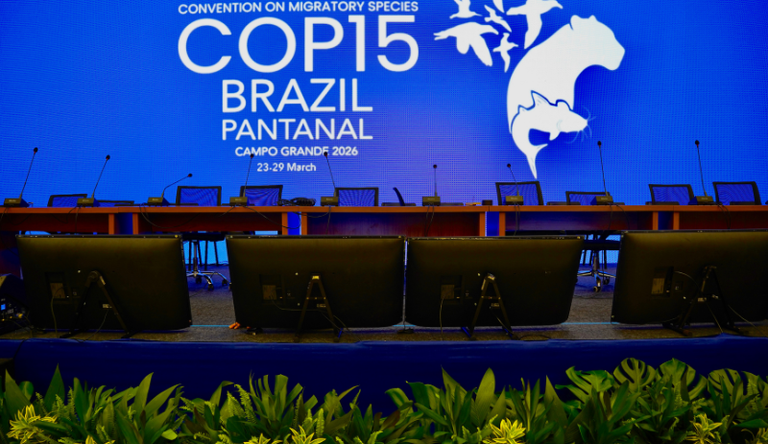
As governments, conservation organisations and partners convene this week at the 15th Conference of the Parties to the Convention on Migratory Species (CMS COP15), the global biodiversity agenda reaches a critical turning point.
Taking place from 23–29 March 2026 in Campo Grande, Brazil, CMS COP15 is a key moment to assess progress, align priorities and mobilise the resources needed to deliver on international commitments for migratory species and biodiversity more broadly.
Among the initiatives under discussion, the African Carnivores Initiative (ACI) offers an effective, collaborative platform for transboundary species conservation.
From commitments to delivery under the African Carnivores Initiative
The ACI, developed under CMS in collaboration with CITES, provides a comprehensive, range State-driven Programme of Work for the conservation of Africa’s iconic large carnivores.
It brings together:
- Agreed regional and national priorities
- Technical guidance on coexistence, disease management and habitat connectivity
- A platform for coordinated international action
Yet, as highlighted in discussions at COP15, implementation remains uneven and underfunded.
The gap is no longer in planning. It is in delivery.
IUCN Save Our Species: a mechanism to scale up conservation action
At this pivotal moment, IUCN is positioning its Save Our Species (SOS) programme as the operational mechanism capable of accelerating implementation of the ACI.
This role is grounded in a formal memorandum of understanding signed with CMS at COP14 in 2024, which recognises SOS as a delivery partner to support ACI implementation .
Through its African Wildlife Initiative (AWI), SOS already demonstrates what effective delivery looks like at scale:
- 80 grants to African civil society organisations since 2017
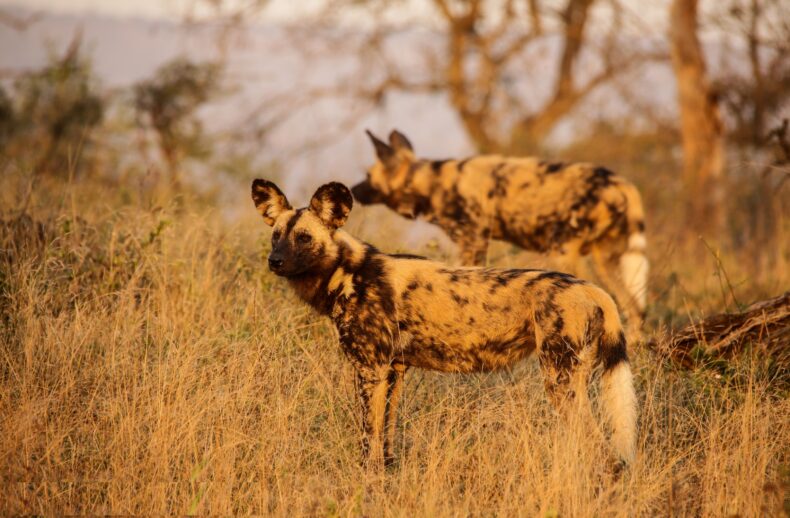
- 35 projects targeting lions, leopards, cheetahs and African wild dogs
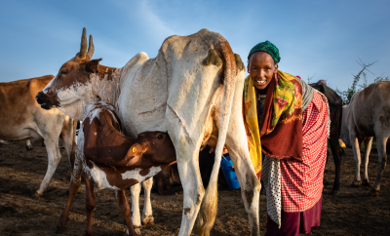
- 30+ initiatives addressing human–wildlife conflict
- Direct alignment with national strategies and ACI priorities
- Operationalisation of disease management guidelines
- EU co-financing already supporting implementation
This portfolio shows that SOS is not a theoretical mechanism, it is already delivering results aligned with the ACI Programme of Work.
Scaling up: from projects to landscape-level impact
A central theme emerging from COP15 is the need to scale conservation efforts beyond isolated projects.
Through its grantmaking model, SOS enables this transition by:
- Supporting the implementation of national and regional carnivore action plans
- Embedding coexistence approaches within national systems
- Strengthening wildlife health preparedness
- Facilitating coordinated cross-border conservation across range States
This portfolio-based approach allows conservation efforts to operate at the scale required to maintain viable carnivore populations across connected landscapes.
A catalytic financing opportunity at COP15
COP15 also represents a key financing moment.
Recent efforts led by IUCN have secured a significant philanthropic commitment for carnivore conservation. However, unlocking these funds requires matching contributions.
This creates a clear opportunity for partners convened at COP15.
By investing through SOS, donors can:
- Leverage existing financial commitments
- Align directly with CMS and ACI priorities
- Channel funding efficiently to African organisations
- Support transparent, accountable, results-based implementation
At a time when biodiversity finance is under increasing scrutiny, SOS offers a credible and scalable mechanism to deliver impact where it is most needed.
Delivering before 2030
The discussions taking place at CMS COP15 reinforce a shared understanding:
The commitments exist.
The Programme of Work is in place.
The partnerships are established.
What remains is the collective effort to finance and deliver implementation at scale.
Through the Save Our Species programme, IUCN stands ready to work with CMS Parties, donors and partners, building on the momentum of COP15, to accelerate the implementation of the African Carnivores Initiative.
Turning global commitments into coordinated action will be essential to ensure that Africa’s iconic carnivores continue to thrive across connected landscapes for generations to come.