Preventing the spread of the Asian hornet in the Azores (Portugal)
Project description
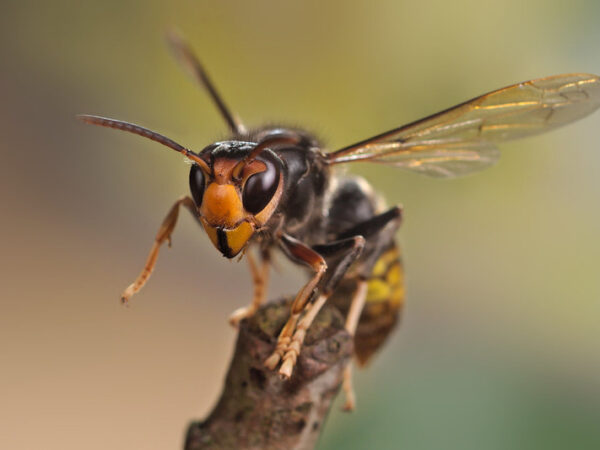
The Asian hornet (Vespa velutina), an invasive predator that threatens biodiversity and pollination services, was first detected in the Azores in January 2025. Its distribution remains limited to São Miguel Island, presenting a critical opportunity to eradicate the species before it spreads further.
Threats

Invasive alien species
This project aims to prevent the establishment and spread of the Asian hornet through an integrated approach combining early detection, rapid response and targeted nest eradication. Building on existing surveillance networks, innovative detection technologies and cooperation with regional authorities, the project will strengthen local capacity to identify and eliminate hornet colonies.
It will also investigate the hornet’s impact on pollinators, particularly hoverflies (Syrphidae), to inform future conservation measures and help safeguard the Azores’ unique biodiversity.
The project is managed by Fundação Gaspar Frutuoso and implemented by the Regional Government of the Azores, in close collaboration with the University of the Azores. The Regional Secretariat for Agriculture and Food (SRAA) serves as an institutional partner, while the Regional Directorate for Agriculture, Veterinary and Food (DRAVA) plays a key operational role in field surveillance, nest detection and eradication and the coordination of rapid-response interventions, in accordance with its institutional responsibilities.
Project objectives
The project aims to prevent the establishment and spread of the Asian hornet on São Miguel Island by strengthening early detection, surveillance and rapid eradication measures. It seeks to improve nest detection and removal, reinforce coordination among local authorities and stakeholders, and reduce the risk of reinvasion. The project will also investigate potential predation pressure on pollinators, particularly hoverflies, to support evidence-based conservation and long-term invasive species management in the Azores.
Project activities
- Strengthen surveillance in high-risk areas using an existing network of more than 550 traps, supported by georeferenced monitoring and spatial analysis.
- Deploy radio telemetry and thermal imaging drones to locate Asian hornet nests, followed by targeted eradication by trained teams using established safety and environmental protocols.
- Promote citizen participation in early detection through reporting systems that enable rapid identification of new sightings and intervention.
- Provide stakeholder training and raise awareness of biosecurity measures to reduce the risk of reinvasion and further spread.
- Conduct DNA metabarcoding analyses of hornet larval material to identify prey species and assess potential impacts on native pollinators, particularly hoverflies.