A Future for Lemurs: The people, landscapes and conservation efforts protecting Madagascar’s most threatened species
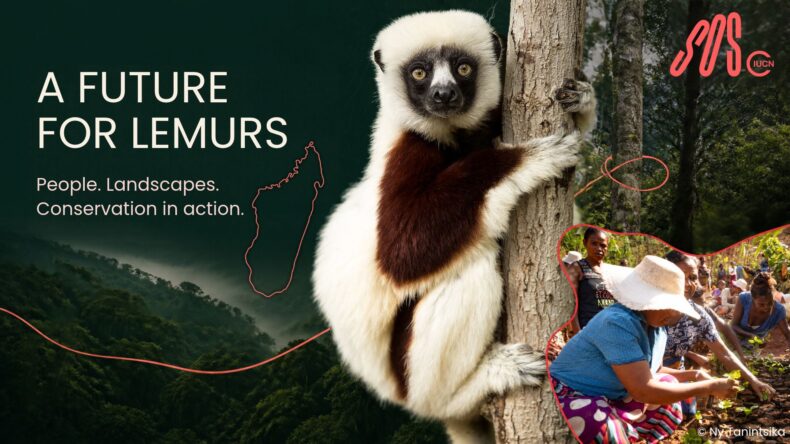
What does it really take to save a lemur? A protected forest? A thriving local community? A team of dedicated conservationists? The answer is rarely just one of these.
This World Lemur Day, IUCN invites you on a year-long journey across Madagascar to discover the people, places and conservation efforts shaping a future for the island’s remarkable primates.
Madagascar: An extraordinary island under pressure
Picture Madagascar’s rainforests at dawn. The calls of indris carry through the canopy, while sifakas move between the trees and other lemurs forage for food. These forests are home to some of the world’s most remarkable wildlife, with lemurs among their most distinctive inhabitants.
Lemurs have evolved in isolation over millions of years, adapting to habitats ranging from humid rainforests and dry forests to wetlands and Madagascar’s spiny thickets. Many species play an important ecological role by dispersing seeds and helping forests regenerate.
But the landscapes they depend on are under growing pressure.
Habitat loss and fragmentation, unsustainable resource use and hunting have left the vast majority of lemur species threatened with extinction. Some populations are now increasingly isolated in shrinking patches of forest.
The challenges facing Madagascar’s wildlife are closely linked to those facing its people. As one of the world’s poorest countries, Madagascar has many rural communities that depend on forests and natural resources for food, fuel and income. Limited economic opportunities, pressure on agricultural land and the growing impacts of climate change can intensify this dependence, placing further strain on already threatened habitats.
Protecting lemurs therefore requires solutions that also support the communities living alongside them. Promoting sustainable agricultural practices, strengthening food security and developing sustainable livelihoods can help families meet their needs while reducing pressure on forests.
Across Madagascar, conservation organisations and local communities, among many other actors, are working to address these interconnected challenges. Their efforts take many forms, shaped by the species, landscapes and people involved.
And over the coming year, we want to take you closer to that work.
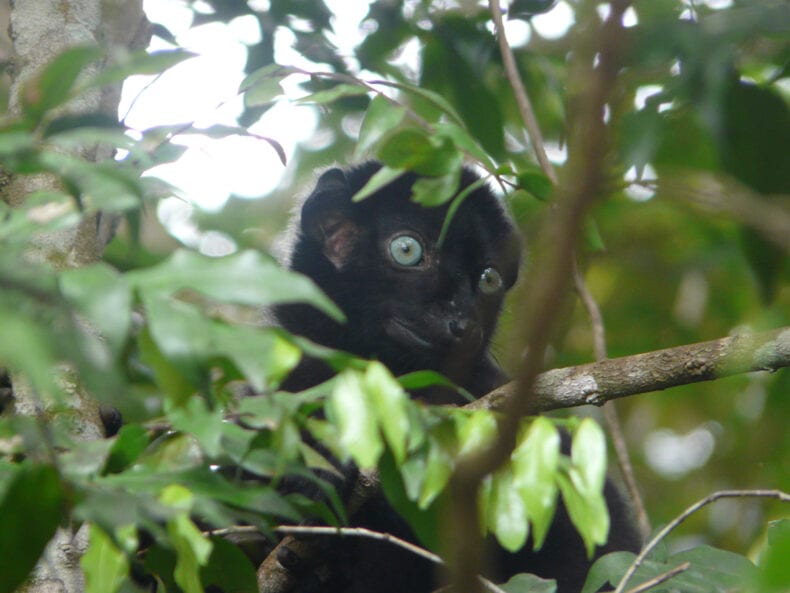

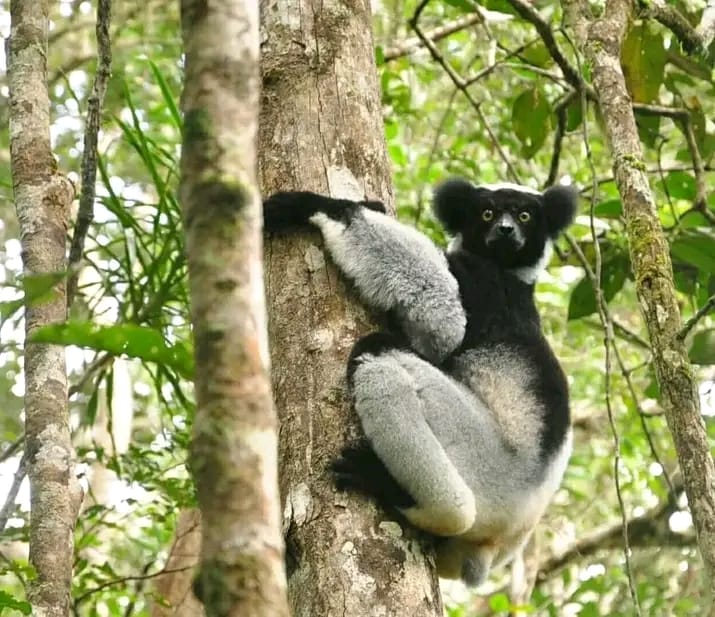
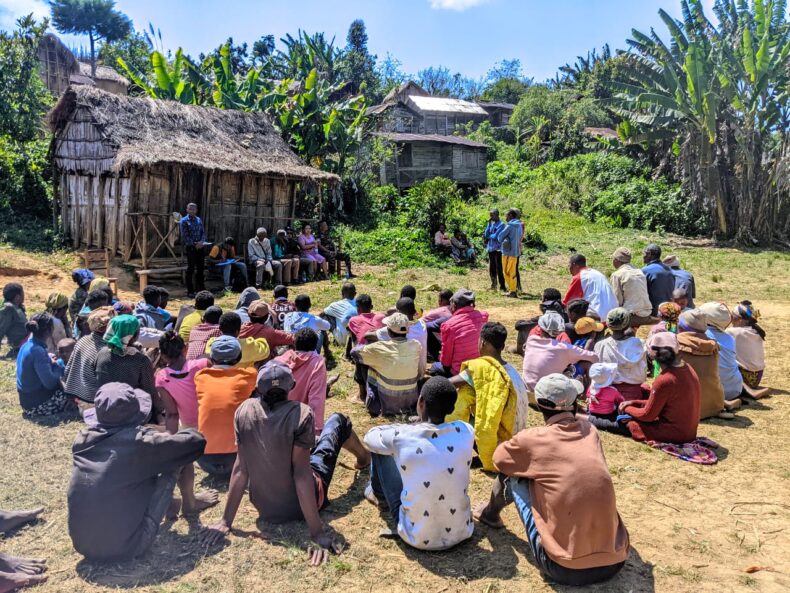
What does lemur conservation look like on the ground?
There is no universal blueprint for protecting Madagascar’s lemurs.
In some landscapes, conservation teams are restoring degraded forests or reconnecting habitats that have been separated for decades. Elsewhere, researchers are tracking elusive species, strengthening protected area management or working with communities to develop more sustainable ways of using natural resources.
Livelihoods are an essential part of this work.
For families living near threatened lemur habitats, conservation measures can have direct implications for how they grow food, earn an income and access natural resources. Projects may therefore combine habitat protection with support for sustainable farming practices, improved food production, alternative livelihoods or more effective community management of forests. These activities can help communities meet their needs while reducing pressures on the ecosystems that lemurs depend on.
Each approach comes with its own challenges.
Restoring a forest takes years, and the benefits may only become visible over time. Monitoring a threatened species requires reliable data, patience and detailed knowledge of its habitat. Working with communities means understanding local priorities, building trust and finding together solutions that can be sustained beyond the duration of a project.
These practical realities rarely make headlines, yet they shape what conservation can achieve.
The knowledge of local conservation practitioners, researchers and communities is particularly important. Their understanding of the landscapes, species and pressures involved helps inform conservation decisions and adapt activities as conditions change.
Across Madagascar, this work is already taking place, with support from initiatives including IUCN Save Our Species.
Supporting conservation across Madagascar
Since 2017, IUCN Save Our Species has supported organisations working to protect threatened lemurs and their habitats through its SOS Lemurs initiative.
The initiative spans a remarkable diversity of landscapes, species and conservation challenges. A particular priority is strengthening Malagasy conservation organisations and supporting locally led approaches, recognising the importance of building conservation expertise and capacity within the country.

Initiative
SOS Lemurs
SOS Lemurs at a glance
- 49 projects supported during the first phase (2017–2023), targeting 63 lemur species.
- 25 projects across 27 sites supported through the ongoing second phase (2023–2029), targeting 60 lemur species.
Behind these figures are years of fieldwork, partnerships and practical conservation efforts. Projects have supported habitat restoration, species monitoring, improved forest management, stronger local conservation capacity and activities that help communities improve their livelihoods while managing natural resources sustainably.
While their objectives and methods differ, the projects offer valuable insights into what works in different contexts, where difficulties persist and how conservation efforts can be sustained over time.
Over the next year, we’ll explore some of these experiences in greater detail.
One island, many conservation stories
How do you reconnect a forest that has been fragmented for decades? What does it take to monitor a species that is rarely seen? How can communities protect threatened wildlife while maintaining their livelihoods?
These are some of the questions we will explore through A Future for Lemurs.
Launched on World Lemur Day, 30 October 2026, the campaign will introduce a new conservation story each month, taking readers to different landscapes across Madagascar.
Along the way, we’ll meet the people involved, hear about the challenges they encounter and learn what their experiences can tell us about effective conservation.
Each feature will offer a different perspective. Some will focus on a threatened lemur species and the efforts to protect it. Others will explore broader issues such as forest restoration, fire management, sustainable livelihoods or the role of local organisations in shaping conservation priorities.
The stories will be released gradually, building a collection of experiences from across Madagascar.
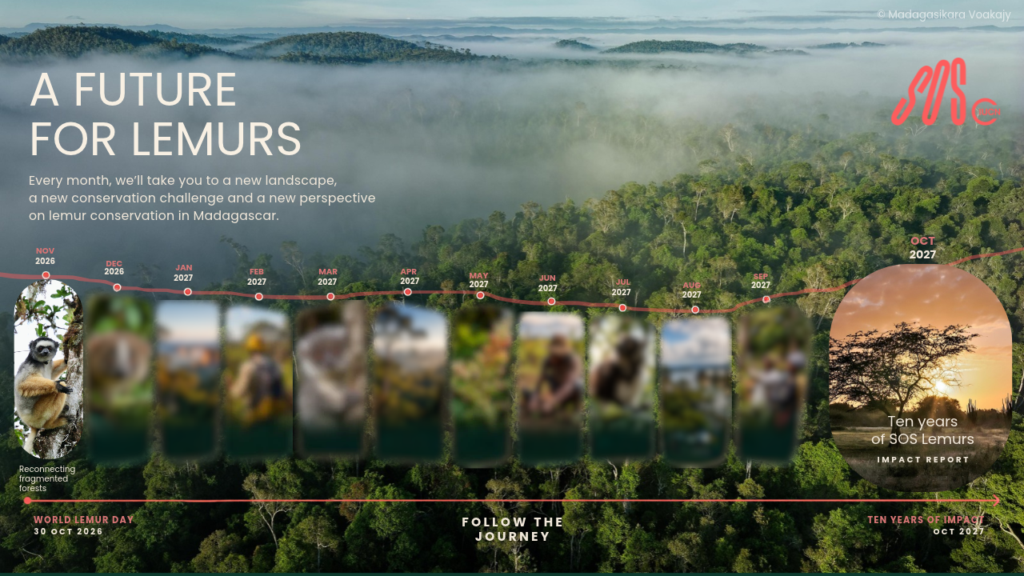
Coming up: Our first story
November 2026 / A closer look at forest connectivity
What happens when forests become fragmented, and what can be done to reconnect them?
Our first story will explore the challenges of habitat fragmentation and the conservation efforts helping lemurs move through the landscapes they depend on.
A new story will be published each month. Follow the series to discover where we go next.
Towards ten years of SOS Lemurs
In October 2027, IUCN will mark ten years of SOS Lemurs.
The anniversary will be an opportunity to look back at the conservation work supported since 2017 and consider what the initiative’s experiences can tell us about protecting threatened species in Madagascar.
Which approaches have delivered results? Where have conservation organisations encountered the greatest difficulties? How have projects helped communities improve their livelihoods while protecting biodiversity? And what has been learned about sustaining conservation efforts beyond individual projects?
Throughout the year, A Future for Lemurs will contribute to this process by sharing experiences from conservation partners and communities across the island.
The campaign will culminate in October 2027 with the publication of a ten-year SOS Lemurs impact report, bringing together achievements, lessons learned and priorities for the years ahead.
Follow the journey
Madagascar’s lemurs continue to face serious threats, and protecting them will require sustained commitment, investment and collaboration.
Across the island, conservation organisations and communities are already putting that commitment into practice. Their experiences offer important lessons, both for the future of Madagascar’s lemurs and for species conservation elsewhere.
Over the coming months, we’ll be sharing those experiences, one story at a time.
We hope you’ll follow the journey.
Join us as we explore A Future for Lemurs.
Follow IUCN Save Our Species for new stories every month