
Strengthening community forest management to protect lemurs and maintain ecological corridors in the Mahafaly Plateau
Project description
The spiny forests of the Mahafaly Plateau in south-western Madagascar are a critical refuge for some of the country’s most threatened lemurs, including the Endangered ring-tailed lemur (Lemur catta) and Verreaux’s sifaka (Propithecus verreauxi). This unique landscape includes the Bezà-Mahafaly Special Reserve and more than 3,900 hectares of community-managed forests that form a vital buffer zone and ecological corridor linking forest ecosystems across the region.
Threats

Climate change

Over-exploitation of natural resources & prey depletion
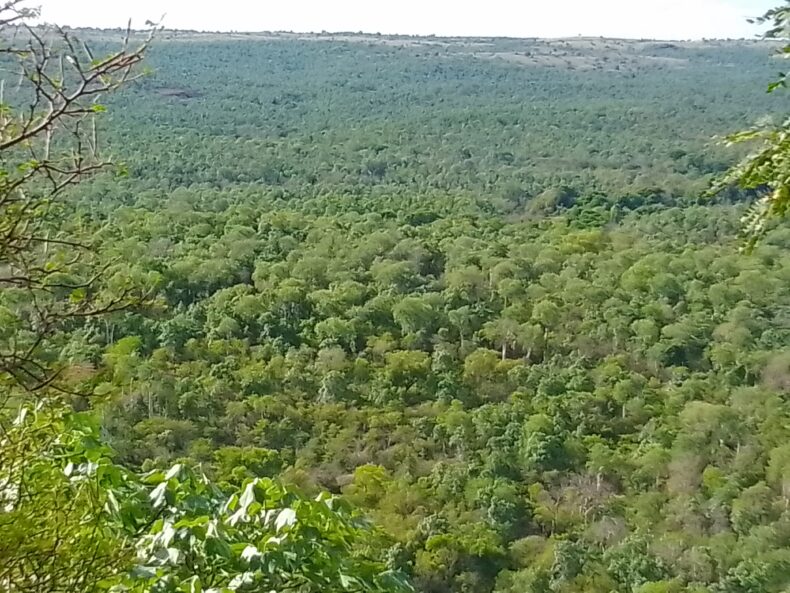
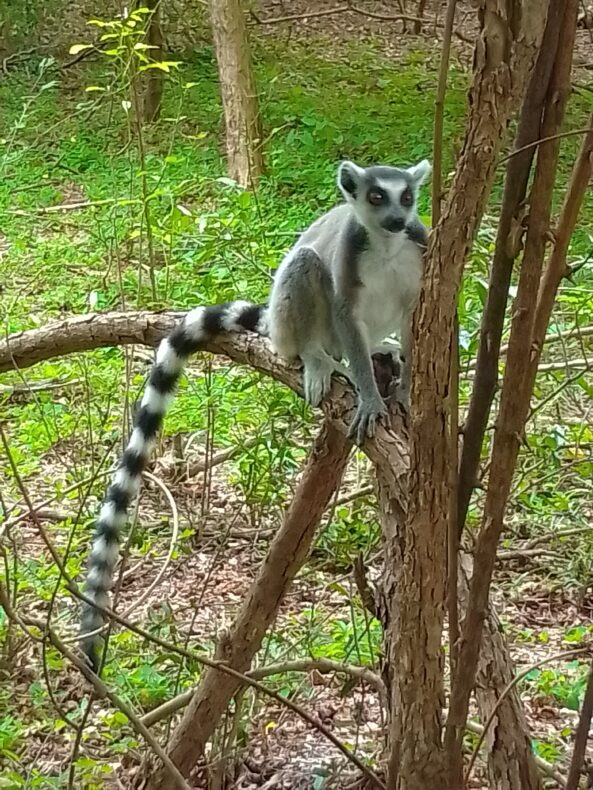
These forests are under growing pressure from slash-and-burn agriculture, charcoal production, illegal logging, uncontrolled fires and poaching, compounded by poverty, drought and climate shocks. As habitats shrink and fragmentation increases, the survival of lemurs and the ecological integrity of the plateau are increasingly at risk. This project strengthens community-led conservation to protect lemurs, secure forest connectivity and improve local livelihoods, ensuring long-term benefits for biodiversity and the people who depend on these ecosystems.
This project is co-implemented by the Association Chrétienne pour le Développement et l’action Environnementale and the Association Lova.
Project objectives
The project aims to improve the long-term viability of threatened lemur populations in the Mahafaly Plateau and the Bezà-Mahafaly Special Reserve by strengthening the engagement and effectiveness of local communities through:
- Reinforcing patrols and environmental monitoring in community-managed forests and the reserve.
- Strengthening and revitalising community-based organisations through organisational and technical support.
- Reducing pressure on forests by promoting sustainable livelihoods, including beekeeping, climate-adapted goat farming, Moringa oleifera production and improved fuel-efficient cookstoves.
Project activities
- Strengthen community patrols through training in SMART monitoring and provision of essential equipment (GPS units, smartphones, uniforms and torches), and support the implementation of at least 144 community patrols.
- Conduct joint law-enforcement operations with community patrols, judicial police officers and regional authorities to deter illegal activities and strengthen protection efforts.
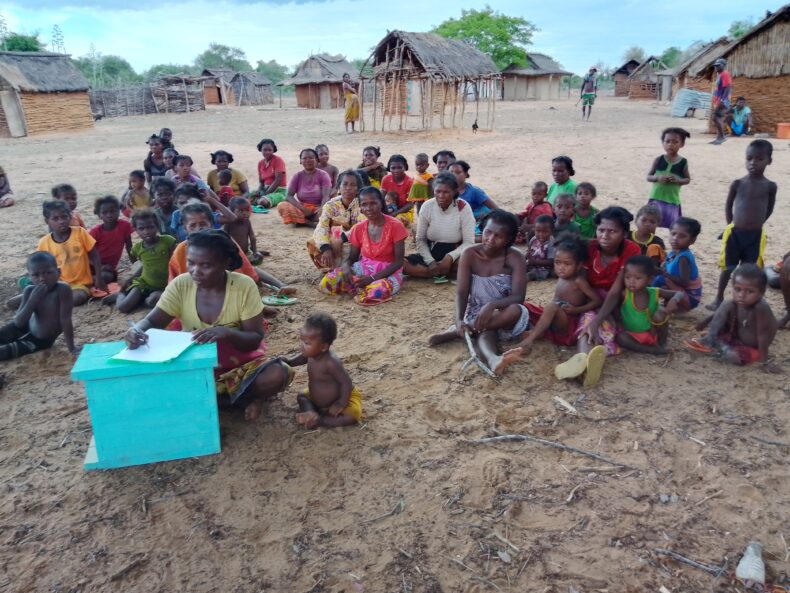
- Strengthen community forest governance by assessing five community-managed forests (TGRN), updating management plans, renewing local governance agreements (dina), and organising official ceremonies to formalise governance arrangements.
- Build sustainable livelihoods by training community members in moringa processing, beekeeping and improved beehive construction, and providing start-up equipment and shared materials.
- Promote sustainable energy use by training 30 households in the production and adoption of improved fuel-efficient cookstoves to reduce pressure on forest resources.