LudBye (Portugal)
Project description
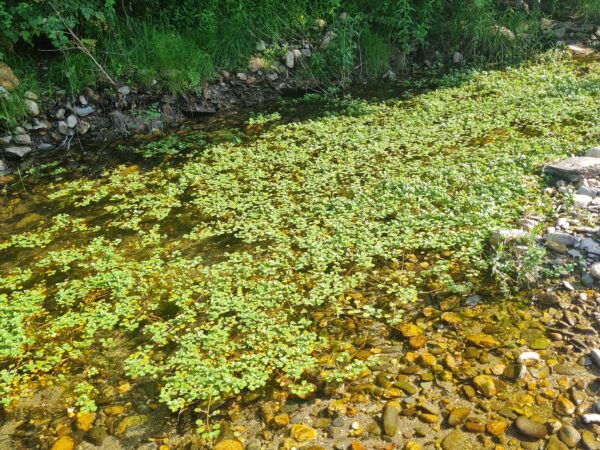
This project aims to monitor and remove invasive aquatic plant species, Ludwigia grandiflora and Ludwigia peploides, from a section of the Alva River in the Coimbra region of Portugal. These species pose a threat to native biodiversity by rapidly spreading and altering freshwater ecosystems.
Threats

Habitat loss & degradation

Invasive alien species
Focusing on an early stage of invasion, the project combines remote sensing technology with targeted field interventions to detect and remove populations efficiently. Mechanical removal will be carried out by a specialised team operating on the river, ensuring that actions are both effective and environmentally sensitive.
By reducing the spread of these invasive plants, the project supports ecological restoration of the river system and helps preserve native species. It also promotes long-term monitoring and public awareness to prevent reinvasion.
This project is implemented by the Comunidade Intermunicipal da Região de Coimbra.
Project objectives
The project aims to control and remove invasive Ludwigia species to protect biodiversity and restore affected habitats. It seeks to conserve native flora and improve the ecological condition of the river ecosystem.
The project also aims to enhance the value and resilience of natural areas by reducing invasive species pressure.
Finally, it aims to support long-term monitoring and awareness to prevent the reappearance and spread of these species.
Project activities
- Monitor and map invasive species: Use remote sensing and field validation to identify and map affected areas.
- Implement targeted removal actions: Carry out mechanical removal using specialised teams and equipment.
- Prevent spread during interventions: Apply containment measures and ensure safe disposal of removed material.
- Raise awareness and support early detection: Install information boards and communicate through digital channels.
- Support long-term monitoring: Continue surveillance using internal resources and community awareness.